
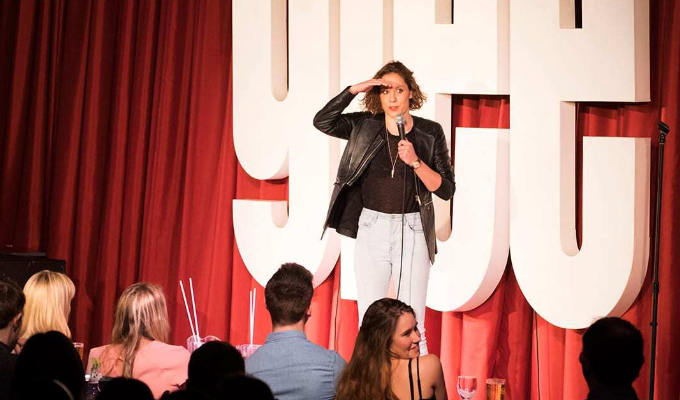
Glee clubs sign up to free-speech charter
'People are tired of tedious cancellations' says its boss
The Glee comedy clubs have vowed to give a platform to comedians even if what they say is 'controversial, unsettling, offensive or politically charged’.
Britain’s largest chain of comedy venues has signed up to a policy created by free-speech campaigners Freedom In The Arts, which has been set up to fight calls for boycotts and cancellations.
Venue owner Mark Tughan pledged his commitment to the cause in Parliament this week as the new group launched a report stating that across the arts ‘creative risk has been gradually displaced by a different dynamic: fear, informal or direct sanctions, quiet cancellations, the normalisation of silence… [and] a heightened sense of anxiety about reputational risk, safeguarding and safety’.
Tughan said: ‘We are operating in a culture of fear: fear of confected or manufactured outrage, fear of pressure or disapproval from other artists, fear of HR complaints, and fear of taking risks.
‘Thus we feel we should move to clarify that a principles-based approach was best going forward. It's not right that we decide who gets booked, particularly for solo shows, based on my or my management's preferences – therein lies unfairness and prejudice.’
It comes in the wake of a number of controversies affecting comedy venues, including:
- The Pleasance cancelling Jerry Sadowitz’s 2022 Edinburgh Fringe show following a complaint.
- The Stand disinviting SNP MP Joanna Cherry, who has been critical of increasing transgender rights, in 2023 following pressure from their staff – only to reinstate her appearance later.
- The Soho Theatre, which has banned comic Paul Currie from appearing after he clashed with Jewish audience members in an incident they saw as antisemitic.
In Parliament, Tughan, revealed that he had received a fatwa demanding he cancel a show featuring the Dutch comedian and fierce Islam critic Hans Teeuwen in 2016. The club also faced a backlash for refusing to cancel Sadowitz's shows following the Pleasance incident.
He added: ‘I think the public are rightly tired of tedious tales of venues cancelling events because they "don't align with our values". Such values are by definition subjective and therefore somewhat nebulous. I'm determined that the Glees will never issue one of those silly statements that professes to "support freedom of expression...except this guy!"’.
However he insisted the policy was ‘not a free-for-all’ as anyone booked needed to stay within the law, with ‘clear behavioural expectations and a clear process when concerns arise’.
He added that staff ‘do not get a veto’ – but could decline to work when acts they found offensive were playing, and be offered alternative shifts ‘without detriment’.
‘We are confident that this proportionate course correction by the Glees will be well supported by the public as well as our wonderful staff and all the acts we book,’ he added. ‘Other venues should follow suit.’
Tughan also spoke in support of Father Ted creator Graham Linehan, whose anti-trans views have made him a pariah in comedy. The venue owner said: "The man has been vindicated a thousand times over. It’s a source of regret, to me at least, that some of his peers in our industry still can’t seem to find the strength to acknowledge any regret for the way he was treated.’
ther speakers at the launch event included Roisin Murphy, the singer-songwriter, cancelled for questioning the use of puberty blockers, Josh Breslaw, whose band Oi Va Voi had gigs cancelled by venues in Bristol and Brighton apparently for no other reason than being Jewish and having an an Israeli singer.
The policy the Glee signed up to is here. Its summary reads: ‘We believe freedom of expression is essential to artistic practice and cultural life.
‘Our organisation exists to support artists, audiences, and communities to explore ideas openly, creatively, and without fear.
‘We present work that may be challenging, provocative, or uncomfortable. This is a vital part of what art does: it asks questions, reflects complexity, and invites debate. We do not restrict artistic expression simply because it is controversial or causes offence.
‘We are committed to protecting freedom of expression within the law, while ensuring our spaces are safe and accessible. We support the right to peaceful protest, critique, and disagreement, provided these do not prevent others from engaging with our work.
‘Hosting an artist or event does not mean we endorse the views expressed. Our role is to provide a platform for expression, not to take a position.’
Published: 30 Apr 2026


