 © BBC/James Stack Photography
 'No algorithm would have said Britain wants a comedy about a bloke who grows homunculi'
Full text of BBC comedy chief Jon Petrie's speech to the broadcaster's comedy festvail
As delivered at the Royal Court Theatre, Liverpool, yesterday:
Thank you for joining us for this year’s BBC Comedy Festival. It feels so exciting to have the festival in a city with such ridiculous comedy heritage, from Bread to G’wed, from Ken Dodd to John Bishop, and of course, the original all-round comedy legend, Alison Steadman.
This is now our fifth comedy festival. It’s about looking ahead at what comedy we have coming up on the BBC, but it’s also about celebrating comedy talent, both new and established, on camera and behind the scenes, and making sure that comedy gets the attention and respect it deserves.
Basically, it’s a business conference where we take comedy so seriously we give people lanyards. In our industry, it can often feel that comedy is like a scruffy sibling at the family gathering, while drama gets the big entrance and entertainment the shiny floor. Personally, I feel we are the rebel sibling. We are the Prince Harry of the TV genre. I won’t say who’s Andrew.
But either way, comedy has to fight hard in an industry of pretension for status and sometimes for survival. And this festival is part of that fight.
And it’s odd really because comedy is what people turn to again and again. It is what we quote, it’s what we rewatch, it’s what brings us together.
I’m watching Red Dwarf with my kids at the moment, which is really fun, but it’s also quite awkward explaining to a ten-year-old what’s so funny about the word ’smeg’.
Comedy’s now available on the NHS to help people with mental health issues, and surely it won’t be long before your doctor gives you a prescription for it. Take one Mainwaring and one Partridge. Just be careful if your doctor prescribes you a couple of Mandys.
Comedy is part of our survival mechanism. It helps us cope. It’s right up there with doomscrolling, binge drinking, and changing Prime Minister every three months.
So with everything going on in the world, this should be comedy boom time. But as people who work in the business know all too well, scripted comedy is going through a very tough patch, and it has been for a long time. Money’s tight, opportunities are fewer than they should be, and people are making shows under real pressure.
And the extraordinary thing is that in spite of all that, the people in this room, they keep delivering. Bafta-winning Amandaland drew 7.4 million viewers for its Christmas special. Small Prophets has become the BBC’s biggest new scripted launch, with 7.7 million viewers and the biggest programme on BBC Two since records began. .
Very different shows, but both prove that British comedy can be ambitious, original and hugely popular. And other streaming services are available, it’s not just the BBC capturing attention through comedy. In the last few months, Man vs Baby, Saturday Night Live and Last One Laughing have all made a real impact and drawn big audiences.
But what sets the BBC apart is that we’re British comedy’s biggest backer by far.
And in tough times, when there’s less and less scripted comedy on television, that matters even more. Because the BBC doesn’t back comedy to make money, we back it for laughs If we weren’t to support comedy properly, the simple truth is there would be a lot less of it. A lot less space for original voices, a lot less room to take risks. We back comedies because we love them, not because an algorithm tells us to.
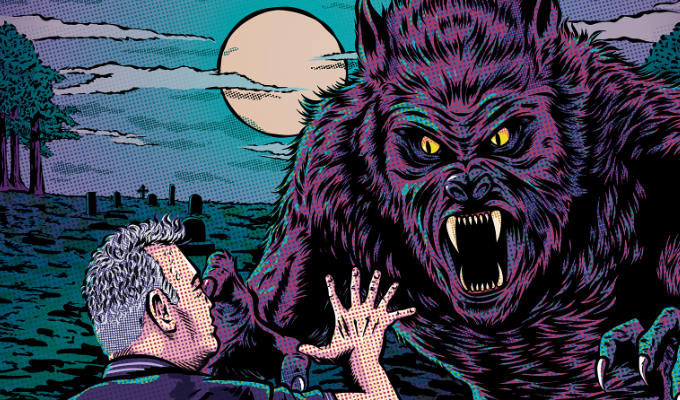
I don’t think an algorithm would have said that the country wants right now is a comedy about a bloke who works at B&Q who grows homunculi in his shed.

Small Prophets
The case for comedy is stronger than it is often given credit for and as other channels and streamers wake up to the fact that comedy can land like no other genre, our message to them is simple: make more. We welcome the competition. Quite literally, the more the merrier. The evidence is there in the hits that people watch now and the comedies they come back to again and again.
Invest in comedy and the British public will do what they always do: Judge it mercilessly, insist they could have done it better and then absolutely love it.
And I should say this too. We’ve got a new director-general starting next week and I fully intend to camp outside his office like I’m going to get a Wimbledon ticket to meet him and make sure he understands just how vital it is for the BBC to keep backing comedy so this brilliant genre can not only survive, but thrive.
This festival is a celebration of what comedy does, of the people who make it, and of a city that has always known its value. And I hope it’s also felt as a promise that BBC is still here, still backing comedy, and still backing the talent in this room.
Published: 14 May 2026