
Stand-up isn't art? Don't make me laugh
Henry Palmer on the case for giving comedy official recognition
Stand-up comedy is not art. At least in the UK, where bodies like Arts Council England (ACE) and the Government’s Department for Culture, Media and Sport (DCMS) don’t officially recognise it as such.
I believe this denial of status places stand-up right where every new cultural force starts: in the pre-recognition era.
This isn't a new story. The arts industry has always looked at emerging forms with a certain scepticism. It reminds me of the dismissive gaze of a seasoned classical musician looking down their nose at something newfangled. In fact, you can trace this precise attitude back to the 17th Century.
Diarist Samuel Pepys, a violin-lover, was so underwhelmed by the guitar in 1667 that he wrote: ‘I was mightily troubled that all that pains should have been taken upon so bad an instrument [the guitar].’
History is littered with examples of cultural gatekeepers scoffing at what would later become beloved art forms:
When film emerged, Virginia Woolf dismissed it in 1926 by saying: ‘The art of the cinema seems simple, even stupid.’
Photography was once viewed as nothing more than a mechanical gimmick. The French poet Charles Baudelaire called it ‘the refuge of failed painters with too little talent’ in 1859.
Even something as fundamental as singing has been treated with suspicion. St. Augustine of Hippo once confessed in his Confessions (around 400CE) that when he felt ‘more moved by the singing than by the things sung… I would prefer not to hear the singer's voice.’
Three and a half centuries later, the guitar is one of the world's most popular instruments. Today, film, photography, and singing are universally acknowledged as art. But stand-up comedy is still waiting for its moment.
The biggest argument I hear against formal recognition by funding agencies is that stand-up doesn't need public cash because it’s a booming commercial success. ‘It’s a £1 billion industry,’ they say, ‘so it must be fine.’
That might be true for the very top-tier comedians with TV deals who fill arenas. But my experience as the founder of a comedy night tells a completely different story. That overall industry wealth rarely trickles down to the individual artist.
When you look beyond the big numbers, the reality is stark. The average annual income for a comedian is shockingly low. The majority of the workforce must act as their own agent, promoter, and administrator. I see a systemic reliance on unpaid labour and precarious working conditions – the free gigs, the ‘bringer’ shows, and the ‘pay-to-plays’– that actively burn out talented people.
Crucially, new stand-up is not developed in plush, publicly-funded theatres. It’s forged in the back rooms of pubs, independent clubs, and tiny, non-subsidised venues. This is the vulnerable grassroots community, the true engine room of the industry, and it's the part that is most in need of support.
Thankfully, there are positive forces pushing for change. I believe the work being done by the Live Comedy Association (LCA) is absolutely critical here. They are leading the charge to get stand-up officially recognised as a distinct art form.
They aren't just making noise; they are providing the evidence needed to counter the government’s arguments. They conducted the first-ever UK live comedy sector survey, providing the kind of economic and workforce data that policy-makers actually listen to.
This advocacy is working. The LCA successfully lobbied the culture, media and sport committee in Parliament to hold an evidence session, and that committee has now urged the government to act. This is huge – it throws the ball straight to the DCMS to end the systematic exclusion of stand-up from major public funding streams.
To fuel this essential advocacy and grassroots support, the LCA has set up the Stand Up & Give Fund. This fund is not just to lobby the suits in Westminster; it's a lifeline for the vulnerable grassroots community, providing training, welfare support, and financial aid to keep the talent pipeline flowing.
Why should a comedy fan care if a comedian gets an ACE grant? Because finally recognising stand-up as art will be revolutionary:
More artistic risk: It will allow artists to pursue experimental, non-commercial, or social-justice work without the immediate pressure to be a commercial hit.
Increased equity: Targeted funding can actively lower the financial barrier for underrepresented and marginalised groups, leading to a richer, more diverse comedy landscape.
Turbo-charged British talent: It will lead to better pay, better working conditions, and encourage our top comedic talent to stay here, reinforcing the UK's global reputation for comedy.
As the founder of The People’s Comedy, an award-winning night dedicated to paying all our acts equally and platforming original, counter-culture voices, I believe this is a fight worth having.
To help the cause, we're hosting a special gig tomorrow (Friday December 5) in Bristol. Not only does it pay all its performers, but all profits are going directly to the LCA’s Stand Up & Give Fund.
When stand-up is finally, fully embraced as the art form it is, British comedy will truly be unstoppable.
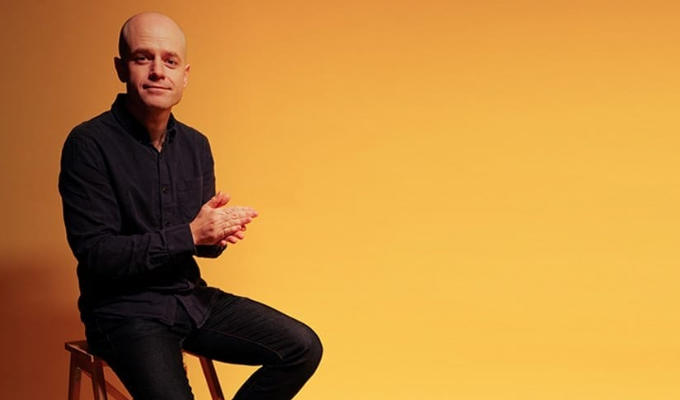
• Henry Palmer is Founder and CEO (Comedic Egalitarian Organism) of The People’s Comedy. Its Stand-up Is Arts gig will take place at PRSC, Bristol. Tickets and information are available here.
Published: 4 Dec 2025