
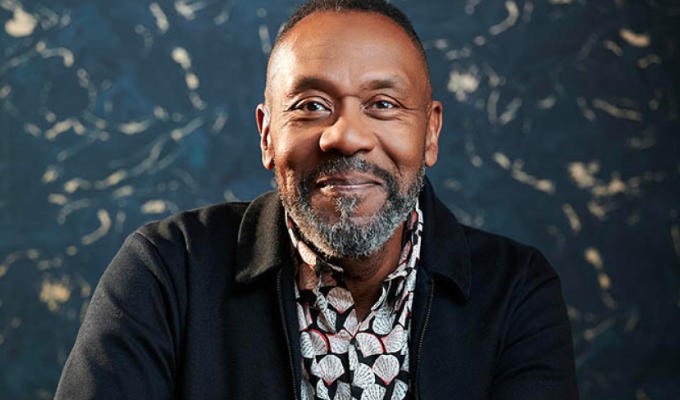
Lenny Henry

Lenny Henry

Date of birth: 28-08-1958

Born in Dudley, West Midlands, to Jamaican immigrant parents, Lenny Henry has been a stand-up comedian since 1975, winning the ITV talent show New Faces when he was just 16.

It landed him a role on LWT's sitcom The Fosters – Britain's first comedy series with predominantly black performers – and gave him a jump-start on the circuit of working men's clubs and summer seasons, where he would perform impressions and joke-book gags.

He also signed up to be one of the comedians on tour with the controversial Black and White Minstrels Show – alongside white song-and-dance men who blacked-up to sing old songs from the days of slavery. He later said of the shows: ‘I didn't really know any better... It hurts thinking about it now. I think the term "ill advised" could be bandied about here.’

He eventually quit the show as he found a new outlet in the Saturday-morning kids' show Tiswas in 1978. Although his early appearances did not go down well, he began to create recurring characters such as David Bellamy and Trevor McDonut, which found favour with the young audience.

Throughout the early Eighties he continued to perform in summer seasons alongside the likes of Cannon and Ball, while also starting to tour his own show in colleges.

After Tiswas, he was signed up to the 1981 BBC sketch show Three of a Kind alongside Tracey Ullman and David Copperfield, which ran for three series. At about this time, he first visited the Comedy Store where he met his future wife, Dawn French, and realised there was a different form of comedy: 'I didn't have to rely on impersonations so much and that I could be funnier by being myself.’

Three of a Kind was followed by his first solo show, the Lenny Henry Show, featuring Delbert Wilkins. It has reappeared under various guises over the years, including Lenny Henry Goes To Town, a prime-time Saturday night show in 1998 in which he visited a different UK town every week, and Lenny Henry In Pieces , which won the Golden Rose Award at the 2001 Montreux Television Festival. In the summer of 2007 he returned to the idea of touring the UK, with Lenny's Britain, a comedy documentary made during his live tour.

Henry claims to be the first British comic to have made a live stand-up comedy film, with Lenny Henry Live and Unleashed going on general release back in 1989. His other live shows have included In Loud (1994), Larger Than Life in (1996), Large 99 (1999), Have You Seen This Man (2002).

Henry also set up his own production company, Crucial Films, whiche made the BBC Two comedy series The Real McCoy.

In 1991, Henry made his Hollywood debut in True Identity, in which he played a white man, but the film proved a flop. In 1993 he made the first series of Chef! for BBC One, playing a short-tempered chef, and was named BBC personality of the year by the Radio and Television Industry Club. A second and third series followed.

He has also appeared in a number of dramatic roles, playing a drug dealer in BBC One's Alive and Kicking in 1991 and as headteacher Ian George in the BBC One drama Hope and Glory, which ran for three series from 1999.

In 1997, Lenny travelled to the Amazon to film a survival documentary for BBC One; and he sailed across the Atlantic Ocean for a two-part documentary, Lenny's Atlantic Adventure, in 2000.

In early 2008, he hosted internet clip show lennyhenry.tv for BBC One, and starred in the Radio 4 show Rudy's Rare Records.

Henry was made a CBE in 1999 and knighted in the 2015 Birthday Honours. He also gained a BA in English Literature from the Open University in 2007.

Read More

Latitude 2026: Saturday highlights

Review from the Suffolk festival

Saturday saw both the most and least famous names play Latitude’s comedy arena. And it was the newbie who impressed the most.

Until now, Lucas Jones Ho’s biggest career landmarks have been winning gong shows – but don’t expect the Welsh-Chinese comedian to stay under the radar for long.

His background formed much of his ten-minute set, such as telling of a forlorn attempt to reclaim the racial insults of his youth. That he uses haiku here is a sign he’s a little bit different. Even when mocking the middle-classness of the festival, as so many do, he made the contrast with his state school memories zip with wit. 

Ho brings a touch of Stewart Lee-style sarcasm to his material – but only a flavour, it’s not the full dish – and he combines it with a fast gag-rate and a self-deprecating style in a winning package.

He was followed by Marcus Brigstocke, performing at his 19th Latitude out of the 20 there have been.

As is well established by now, he’s a political comic whose outlook surely chimes with the comfortable centre-left demographic who populate this festival. But while insulting Donald Trump and cackling at Nigel Farage’s possible downfall at the hands of a bin is like shooting fish in a barrel – Brigstocke does so with a high-powered laser-sighted rifle, obliterating them with precision. 

He then moved on to what would become something of a recurring theme for the afternoon: ageing. More specifically, he focussed on the tendency to rose-tint the past, recognising that’s a natural human trait, but no basis for a political movement. And he had some insight on toxic masculinity, too, including some genuinely eye-opening facts. Truly, if you aren’t laughing, you’re learning.

Where Brigstocke has a clear purpose for his set, that’s the crucial thing Lenny Henry lacked. There’s no denying the man’s charisma, performance skills and effortless likability. Not many people could tell a comedy audience that they won the monarch’s favour with a knighthood and get a huge cheer, but he did.

Part of that’s because we know how much he’s achieved and how far he’s come from an overcrowded immigrant household in Dudley. He mentions this a bit, retelling a couple of anecdotes from his excellent memoirs, but they are more evocative than funny. The double meaning of ‘Black Country’ has surely always been obvious, and barely warrants a low-hanging gag here.

He, too, spoke about ageing, including the ‘black don’t crack’ theory, but the most telling sign is not in his appearance or energy – both a couple of decades below his 67 years – but in the nostalgia he shares, especially for his funk heroes. There are nice gags about James Brown and Prince - and an aimless diversion about Teddy Pendergrass – but the main purposes of this seems to be for Sir Lenny to show off his singing chops. An ambition to be on the main stage, perhaps?

Theophilus P. Wildebeeste – Sir Lenny’s alter-ego based on Pendergrass – also gets a run-out, now hyperaware of consent in this post-MeToo world.

In the same nostalgic vein, Henry leads a singalong of the Beanz Meanz Heinz jingle – well, it works for Peter Kay – part of his panto tendency to invite call-and-response from the audience. Oh, and he does a volley of Tommy Cooper gags, too, just because. 

His set is modestly peppered with decent jokes, including his amusing reasons for turning down various reality TV shows, but his appearance was patchy in tone and intent, culminating in a shaggy-dog story about taking a pee in a pub that, symptomatically, lacks purpose. Oh, to see more of Lenny Henry the comedian and less of Lenny Henry the famous personality. 

Away from the comedy arena, Ben Moor performed his latest hour-long monologue, A Three Thing Day in the Cosmic Shambles Forest, atmospherically backed by the musicians Suns Of Tundra.

His metier is the whimsical storytelling show in the same ballpark as Daniel Kitson, though Moor was doing it first and – certainly in this case – with a lot more ideas. As the title suggests, this hour is split into three segments, them being the funeral of a friend, a visit to his sister for some family admin and attending the opening of his art exhibition: The Periodic Table Of Elephants In The Room.

Yet each is bursting with offbeat ideas, some as mini stories, some as just throwaway lines you might easily miss. The notion of a boxing match with all the punches edited out was a personal favourite, as was the description of a man being ’so polite he knocks on the fridge door before opening it’. The show is rich with such loveliness, with more ideas in five minutes than many stand-ups have in an hour.

The nub of the tale is tantalisingly just out of reach. What do the strange messages on his obscurely branded phone mean? Are the moments of vertigo signs of something too? We never fully know, but the liminality is tantalising. 

The show only falters when he meets a garrulous woman on a train and repeats her stream of consciousness. It’s overwhelmingly intense - as it is intended to be – but goes on too long for something purposefully hard to follow.

For this and many reasons you can buy a book of the show at the merch stand – it would ensure you didn’t miss any of the inventive and quirky bon mots packed to overflowing in this charming, warm, affirming and funny story.

Closing the comedy tent, Jen Brister returned to the topic of the generational divide. And you can’t misspell Generation without Jen.

She is a deliciously bitter comic, sneering at the youth and whoever else happens to catch her eye. The mocking of plastic-surgery faces, for example, is perfectly vicious. 

But the worst of her intolerance is reserved for the person she loves the most, her partner of 20 years. The resentment of her girlfriend for having the audacity to have a persistent cough is palpable. And given how much their kids wind her up, too. the stage is where she can vent her spleen. Let’s hope for her family’s sake she doesn’t take this anger home. 

Brister’s such a charismatic comedian she has the audience hanging on every word, even for a deliberately boring and repetitive recreation of her children’s inane conversations over walkie-talkie, mocked with ever-more stupidly shrill impersonations. Not only do the audience stick with her, but they erupt in a rapturous applause break when it ends.

Enjoy our reviews? Like us to do more? Please consider supporting our in-depth coverage of Britain's live comedy scene with a monthly or one-off ko-fi donation, if you can. The more you support us, the more we can cover! 
Read More

Published: 26 Jul 2026

We see you are using AdBlocker software. Chortle relies on advertisers to fund this website so it’s free for you, so we would ask that you disable it for this site. Our ads are non-intrusive and relevant. Help keep Chortle viable.