 © Netflix

Can We Laugh At That? by Jacques Berlinerblau
Review of a book about comedy in a conflicted age
You might be forgiven for not wanting to read another word about the intractable culture war debate raging over comedy. But in Can We Laugh At That?, Jacques Berlinerblau offers a smart, nuanced and well-informed dive through the issues involved, cutting through the noise of both sides shouting at each other.
He puts heightened tensions over jokes in the context of the decline of what he calls the Pre-Digital Liberal Free Speech Consensus – or just The Consensus – which he has a self-aggrandising habit of capitalising like that as if it were some all-powerful entity. It is the shared value of tolerating things we don’t like hearing and laughing off jokes at our expense in the name of having a functioning democracy and reducing society’s frictions.
But that’s been eroded by social media (obviously), by bad-faith politicians weaponising outrage (does anyone think Trump really believes a Jimmy Kimmel joke is a ‘despicable call to violence’?), by real hatred being concealed in the cloak of comedy, and, unfortunately, by comedians themselves. By constantly testing the line – as is their job – they are paradoxically imperilling the free-speech protections they hold dear, Berlinerblau argues.
The current climate, he says, has changed the way people disapprove of a joke. Where you might once just have tutted and forgotten about it, now you can join a different coalition – the coalition of the outraged – to very actively make your displeasure known.
Then there’s the feedback loop where comedians double down on their gags and comment on the backlash, further stoking divisions. Both sides gaining strength and kudos from their public stance.
The first section of Berlinerblau’s book focuses on case studies of American comedians who have supposedly been cancelled for their material, as opposed to their conduct.
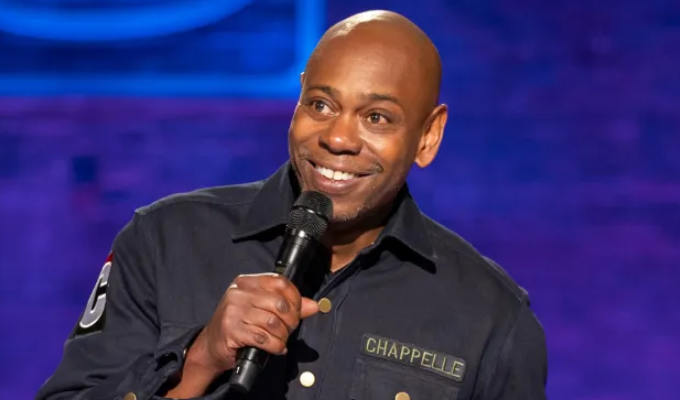
It can be easily argued that Dave Chappelle, pictured, and Shane Gillis have thrived on their controversies surrounding their trans routines and racial and ableist slurs respectively. Meanwhile, Sarah Silverman’s career survived after she expressed unambiguous and genuine regret for provocative old gags whose impact she never fully comprehended at the time.
Only Kathy Griffin – lacerated for posing with Trump’s severed head in a photoshoot – lost a serious proportion of her income (not to mention the cost to her mental health) after being relentlessly attacked by the Maga crew. Did being a woman make the consequences so much harder? Or was it because she offended the illiberal right?
Berlinerblau – who is professor of Jewish civilisation at Georgetown University – offers a fascinating sociological look at these cases, raising a significant point about when a comedian sheds their armour of persona and starts commenting as themselves, among others.
After the Americans, the book takes a global perspective, looking at comics who have challenged the consensus in other liberal democracies.
First is Vir Das’s darkly satirical Two Indias speech – delivered as himself at the end of a gig in Washington DC – in which he spoke about the good and bad of his homeland, but which critics on the right derided for essentially airing the nation’s dirty laundry in public. It became an angry political issue, as so often happens as India’s vibrant stand-up scene clashes against society’s more conservative or more religious elements.
Then there is Bassem Youssef, hailed as Egypt’s answer to Jon Stewart and praised for standing up against the Muslim Brotherhood during the Arab Spring. But when he started mocking the El-Sisi government that emerged afterwards, the new regime cracked down and forced him into exile… and his erstwhile supporters seemed fine with that once it was their side doing the silencing.
Berlinerblau uses other implications from that case to caution against comedians like Youssef, Stewart, John Oliver or Samantha Bee effectively doing the work of journalists – although news parody is such a well-established genre it’s hard to imagine anyone listening to him.
The author brings up a couple of French cases that are challenging for free-speech advocates on the left: Charlie Hebdo magazine and stand-up Dieudonné M’bala M’bala, an unrepentant antisemite who’s waged a decades-long war for his right to say repulsive things.
The 2015 massacre of Charlie Hebdo staff for printing a satirical cartoon of the prophet Mohammed provoked much global soul-searching. Some newspapers published the image in solidarity, at great risk, while many were cowed into not doing so. And it certainly muddies the waters of whether they were ‘punching up’ at the Islamists who insist on imposing their values under threat of violence, or ‘punching down’ at France’s Muslim immigrant community.
Elsewhere in the world, comedians are hounded in the courts, menaced by vigilantes and paramilitaries and sometimes forced into exile, imprisoned or even murdered. Berlinerblau includes a particularly graphic account of the treatment meted out to Zimbabwean comedian Samantha Kureya – aka Gonyeti – for making jibes about the government. That she has continued to work, even thrive, after that is testament to her spirit, which Berlinerblau sees in other comedians, too – a compulsion to joke even when it’s not in their interests.
By covering – and insightfully analysing – a broad range of comedy controversies, Berlinerblau effectively sets out the landscape stand-ups have to negotiate, why things are the way they are, and how sometimes comedians can be their own worst enemy.
None of this will defuse the increasingly polarised world in which we all exist, and in which comics can take a risk every time they put their head over the parapet, but Berlinerblau does a fine job of explaining where we are, and how we got here.
• Can We Laugh At That? by Jacques Berlinerblau is available from Amazon priced £16.56 in paperback – or from uk.bookshop.org, below, which supports independent bookstores.
Published: 30 Apr 2026