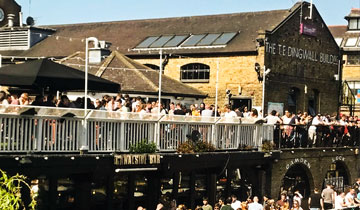
+ Funny's Funny female comedian of 2011 final (Gemma Beagley)
|
Gemma Beagley - Live Review
|
|
It was set up as a celebration of female comedy. But the new Funny’s Funny award actually proved there’s no such thing. It’s just comedy. For the 13 finalists, chosen from more than 220 applicants over 21 heats, demonstrated such a diverse range of styles - musical, dark, surreal, character, awkwardly nerdy and confidently chatty – that any attempt to define ‘female comedy’ is meaningless. In the name of full disclosure, Chortle underwrote this competition, in support of the comedians who put it together with remarkable speed in protest at the entry fee the Funny Women competition introduced. However the acts who made this final at Camden Highlight were independently selected, and our interest is limited only to the backing we’ve already given. Drawn in the never-popular opening spot, 21-year-old Laura Carruthers set a sort of happy medium for the night. Just out of university, her lack of worldliness sometimes came through in formulaic set-ups, or punchlines that were little more than a blast of bad language, often inappropriately aimed at her own relatives. Yet there are enough quirky lines to generate laughs – and more importantly demonstrate promise – even if she didn’t always seem entirely confident on stage, despite her inherent low-key likability. Jokes are Steph Lane’s stock-in-trade, and she never relented on the one-liners, strung together in an apparently conversational set. They are of mixed quality, and while some were great, quite a few fell just a little short of what they could have been, which is slightly frustrating since the wit is tangible and the delivery strong. There’s a bit too much focus on ironically tasteless gags about child labour – ironically enough it’s a subject she overworks – but other dark-cored quips hit their mark. If there are stereotypes of female comics, a cute girl with a guitar is probably high on the list, and Kate Lucas opened her set almost exactly as you’d expect... with a twee plinky-plonky nursery rhyme – but all about dogging. But even in the confines of this short set, the quality built up considerably, especially with the stand-out closing number, about various forms of ill-will she wishes on an ex combines deft lyrics with a lovely sense of progression. This was surely the song that secured her second place, and more like this will make her a formidable force. The Dory Lama has a stage name to make you cringe; though it’s not a character act. American Dory Dutton does sometimes feel like a cliche of positive self-assertion, though usually undermined by a sly joke at her own expense. Some are tired – ‘They say love is blind.. well, it helps if your partner is!’ – while the idea that, at 49, she’s now utterly decrepit is hard to take. She’s technically strong, and a confidence performer, but seems to be too guarded behind a slick persona to really click with. Harriet Kemsley is the opposite. She appears to be a naive bag of nerves, terminally uncool even in this alpha-female position. Yet she is an excellent writer, exploiting that persona for some fresh lines about London’s clash of middle- and working-class cultures. Even when on the ground of rape – such an easy subject to do badly in a misguided attempt to be ‘edgy’ - she plotted a steady course; and that combination of uncertain delivery and hard subject-matter, skilfully handled, earned this 24-year-old the top slot on the night. After the first interval, Glaswegian Martha McBrier hit the ground running, with a refreshingly buoyant bout of audience banter, with any material cunningly disguised beneath this lively crowd work. She’s got a couple of great jokes, but her set isn’t really about the writing, but about her personality – and in that she’s the real deal. McBrier’s been in and out of comedy for years, with occasional Fringe runs and little else besides; this competition being her first gigs in three years. She really should stick with it – she’s a natural comic who would sit comfortably in the top echelon of club comperes. It was probably inevitable we’d see at least one ukulele tonight, and it was Eleanor Morton, a 19-year-old performing her first gig outside Scotland, who obliged. Although apparently awkward on stage, she embraced that as part of her personality, and had some knowing asides about the limitations – real or imagined – of musical comedy. Some of the material not backed up with her accompaniment was less certain, but for an act just a year into her career, she could be an interesting prospect. Like McBrier, Annette Fagon is a force-of-nature performer, a bold, brash, Midlander with a loud mouth and the sort of no-nonsense delivery that would command the attention of the bawdiest room, so almost overwhelms this more polite, supportive crowd. Yet she’s friendly with her bluster, and although, again, it’s a matter of personality rather than well-crafted lines, the few minutes in her company are breezily enjoyable. Cariad Lloyd was the first character act of the night, appearing in the guise of swotty schoolboy Andrew presenting a project about Russian history. It’s not an immediately easy creation to get a handle on - he’s weird, but not out-and-out demented - and the humour is underplayed. But he gradually grows on you, thanks to such nicely-done routines as the deconstruction of Michael McIntyre-style observational comedy, and the growing personality puts the quirkily distinctive lines in context. Apart from the limitations of using home-sketched drawings that are almost impossible to see from anything but the front few rows, this was a unique character, neatly executed, and worthy of the third placing. Alison Thea-Skot’s creation, the vocal coach Tiff Mason, was louder both literally and figuratively. The actress has a huge vocal range, which she impressively (if not always that humorously) shows off. There are a few decent lines, mostly driven by her barely-disguised distain for her daughter, but the delivery’s none-too-subtle - a sort of drama-school mugging that batters the comedy home. Turn it down a bit! With her fast-talking South London banter, Gemma Beagley started the third section with style. Her routine revolves around her insecure loneliness - but any dourness of subject matter is tempered with a chipper self-deprecation and some nifty turns of phrase. It’s a quite straightforward, no-frills approach to stand-up, but she’s more than competent with it, and an act we’re sure to hear more from. Luisa Omielan was more of a show-off, with an almost childishly silly fragmented steam-of-consciousness. This is probably only ever going to be a minority taste and the audience were slow to climb aboard here – although her recreation of cows with regional accents brought everyone onside. There is a charm behind the dottiness, but it also seems self-indulgent, and the apparently random download of daft ideas should probably be focussed more if she’s to avoid a future that involves being the novelty nutter baffling the Britain’s Got Talent judges. Finally Helen Keeler, an affable enough Scouser who didn’t really have enough pull to engage the crowd after 12 other comedians. Catholicism is a big part of her set, especially a card of St Christopher designed for travellers, but religion has been debunked so often, it needs more of a twist than this to stand out. She has a certain poise on the stage, despite only being a year into her comedy career, but it’s not enough to make her memorable. But overall a good crop of comedians from this inaugural event... the thought that any of them should have to pay to be on a stage is frankly absurd. |
|
Date of live review: Thursday 14th Jul, '11 |
|
Review by Steve Bennett |
+ Funny's Funny female comedian of 2011 final (Eleanor Morton)
|
Eleanor Morton - Live Review
|
|
It was set up as a celebration of female comedy. But the new Funny’s Funny award actually proved there’s no such thing. It’s just comedy. For the 13 finalists, chosen from more than 220 applicants over 21 heats, demonstrated such a diverse range of styles - musical, dark, surreal, character, awkwardly nerdy and confidently chatty – that any attempt to define ‘female comedy’ is meaningless. In the name of full disclosure, Chortle underwrote this competition, in support of the comedians who put it together with remarkable speed in protest at the entry fee the Funny Women competition introduced. However the acts who made this final at Camden Highlight were independently selected, and our interest is limited only to the backing we’ve already given. Drawn in the never-popular opening spot, 21-year-old Laura Carruthers set a sort of happy medium for the night. Just out of university, her lack of worldliness sometimes came through in formulaic set-ups, or punchlines that were little more than a blast of bad language, often inappropriately aimed at her own relatives. Yet there are enough quirky lines to generate laughs – and more importantly demonstrate promise – even if she didn’t always seem entirely confident on stage, despite her inherent low-key likability. Jokes are Steph Lane’s stock-in-trade, and she never relented on the one-liners, strung together in an apparently conversational set. They are of mixed quality, and while some were great, quite a few fell just a little short of what they could have been, which is slightly frustrating since the wit is tangible and the delivery strong. There’s a bit too much focus on ironically tasteless gags about child labour – ironically enough it’s a subject she overworks – but other dark-cored quips hit their mark. If there are stereotypes of female comics, a cute girl with a guitar is probably high on the list, and Kate Lucas opened her set almost exactly as you’d expect... with a twee plinky-plonky nursery rhyme – but all about dogging. But even in the confines of this short set, the quality built up considerably, especially with the stand-out closing number, about various forms of ill-will she wishes on an ex combines deft lyrics with a lovely sense of progression. This was surely the song that secured her second place, and more like this will make her a formidable force. The Dory Lama has a stage name to make you cringe; though it’s not a character act. American Dory Dutton does sometimes feel like a cliche of positive self-assertion, though usually undermined by a sly joke at her own expense. Some are tired – ‘They say love is blind.. well, it helps if your partner is!’ – while the idea that, at 49, she’s now utterly decrepit is hard to take. She’s technically strong, and a confidence performer, but seems to be too guarded behind a slick persona to really click with. Harriet Kemsley is the opposite. She appears to be a naive bag of nerves, terminally uncool even in this alpha-female position. Yet she is an excellent writer, exploiting that persona for some fresh lines about London’s clash of middle- and working-class cultures. Even when on the ground of rape – such an easy subject to do badly in a misguided attempt to be ‘edgy’ - she plotted a steady course; and that combination of uncertain delivery and hard subject-matter, skilfully handled, earned this 24-year-old the top slot on the night. After the first interval, Glaswegian Martha McBrier hit the ground running, with a refreshingly buoyant bout of audience banter, with any material cunningly disguised beneath this lively crowd work. She’s got a couple of great jokes, but her set isn’t really about the writing, but about her personality – and in that she’s the real deal. McBrier’s been in and out of comedy for years, with occasional Fringe runs and little else besides; this competition being her first gigs in three years. She really should stick with it – she’s a natural comic who would sit comfortably in the top echelon of club comperes. It was probably inevitable we’d see at least one ukulele tonight, and it was Eleanor Morton, a 19-year-old performing her first gig outside Scotland, who obliged. Although apparently awkward on stage, she embraced that as part of her personality, and had some knowing asides about the limitations – real or imagined – of musical comedy. Some of the material not backed up with her accompaniment was less certain, but for an act just a year into her career, she could be an interesting prospect. Like McBrier, Annette Fagon is a force-of-nature performer, a bold, brash, Midlander with a loud mouth and the sort of no-nonsense delivery that would command the attention of the bawdiest room, so almost overwhelms this more polite, supportive crowd. Yet she’s friendly with her bluster, and although, again, it’s a matter of personality rather than well-crafted lines, the few minutes in her company are breezily enjoyable. Cariad Lloyd was the first character act of the night, appearing in the guise of swotty schoolboy Andrew presenting a project about Russian history. It’s not an immediately easy creation to get a handle on - he’s weird, but not out-and-out demented - and the humour is underplayed. But he gradually grows on you, thanks to such nicely-done routines as the deconstruction of Michael McIntyre-style observational comedy, and the growing personality puts the quirkily distinctive lines in context. Apart from the limitations of using home-sketched drawings that are almost impossible to see from anything but the front few rows, this was a unique character, neatly executed, and worthy of the third placing. Alison Thea-Skot’s creation, the vocal coach Tiff Mason, was louder both literally and figuratively. The actress has a huge vocal range, which she impressively (if not always that humorously) shows off. There are a few decent lines, mostly driven by her barely-disguised distain for her daughter, but the delivery’s none-too-subtle - a sort of drama-school mugging that batters the comedy home. Turn it down a bit! With her fast-talking South London banter, Gemma Beagley started the third section with style. Her routine revolves around her insecure loneliness - but any dourness of subject matter is tempered with a chipper self-deprecation and some nifty turns of phrase. It’s a quite straightforward, no-frills approach to stand-up, but she’s more than competent with it, and an act we’re sure to hear more from. Luisa Omielan was more of a show-off, with an almost childishly silly fragmented steam-of-consciousness. This is probably only ever going to be a minority taste and the audience were slow to climb aboard here – although her recreation of cows with regional accents brought everyone onside. There is a charm behind the dottiness, but it also seems self-indulgent, and the apparently random download of daft ideas should probably be focussed more if she’s to avoid a future that involves being the novelty nutter baffling the Britain’s Got Talent judges. Finally Helen Keeler, an affable enough Scouser who didn’t really have enough pull to engage the crowd after 12 other comedians. Catholicism is a big part of her set, especially a card of St Christopher designed for travellers, but religion has been debunked so often, it needs more of a twist than this to stand out. She has a certain poise on the stage, despite only being a year into her comedy career, but it’s not enough to make her memorable. But overall a good crop of comedians from this inaugural event... the thought that any of them should have to pay to be on a stage is frankly absurd. |
|
Date of live review: Thursday 14th Jul, '11 |
|
Review by Steve Bennett |
+ Funny's Funny female comedian of 2011 final (Harriet Kemsley)
|
Harriet Kemsley - Live Review
|
|
It was set up as a celebration of female comedy. But the new Funny’s Funny award actually proved there’s no such thing. It’s just comedy. For the 13 finalists, chosen from more than 220 applicants over 21 heats, demonstrated such a diverse range of styles - musical, dark, surreal, character, awkwardly nerdy and confidently chatty – that any attempt to define ‘female comedy’ is meaningless. In the name of full disclosure, Chortle underwrote this competition, in support of the comedians who put it together with remarkable speed in protest at the entry fee the Funny Women competition introduced. However the acts who made this final at Camden Highlight were independently selected, and our interest is limited only to the backing we’ve already given. Drawn in the never-popular opening spot, 21-year-old Laura Carruthers set a sort of happy medium for the night. Just out of university, her lack of worldliness sometimes came through in formulaic set-ups, or punchlines that were little more than a blast of bad language, often inappropriately aimed at her own relatives. Yet there are enough quirky lines to generate laughs – and more importantly demonstrate promise – even if she didn’t always seem entirely confident on stage, despite her inherent low-key likability. Jokes are Steph Lane’s stock-in-trade, and she never relented on the one-liners, strung together in an apparently conversational set. They are of mixed quality, and while some were great, quite a few fell just a little short of what they could have been, which is slightly frustrating since the wit is tangible and the delivery strong. There’s a bit too much focus on ironically tasteless gags about child labour – ironically enough it’s a subject she overworks – but other dark-cored quips hit their mark. If there are stereotypes of female comics, a cute girl with a guitar is probably high on the list, and Kate Lucas opened her set almost exactly as you’d expect... with a twee plinky-plonky nursery rhyme – but all about dogging. But even in the confines of this short set, the quality built up considerably, especially with the stand-out closing number, about various forms of ill-will she wishes on an ex combines deft lyrics with a lovely sense of progression. This was surely the song that secured her second place, and more like this will make her a formidable force. The Dory Lama has a stage name to make you cringe; though it’s not a character act. American Dory Dutton does sometimes feel like a cliche of positive self-assertion, though usually undermined by a sly joke at her own expense. Some are tired – ‘They say love is blind.. well, it helps if your partner is!’ – while the idea that, at 49, she’s now utterly decrepit is hard to take. She’s technically strong, and a confidence performer, but seems to be too guarded behind a slick persona to really click with. Harriet Kemsley is the opposite. She appears to be a naive bag of nerves, terminally uncool even in this alpha-female position. Yet she is an excellent writer, exploiting that persona for some fresh lines about London’s clash of middle- and working-class cultures. Even when on the ground of rape – such an easy subject to do badly in a misguided attempt to be ‘edgy’ - she plotted a steady course; and that combination of uncertain delivery and hard subject-matter, skilfully handled, earned this 24-year-old the top slot on the night. After the first interval, Glaswegian Martha McBrier hit the ground running, with a refreshingly buoyant bout of audience banter, with any material cunningly disguised beneath this lively crowd work. She’s got a couple of great jokes, but her set isn’t really about the writing, but about her personality – and in that she’s the real deal. McBrier’s been in and out of comedy for years, with occasional Fringe runs and little else besides; this competition being her first gigs in three years. She really should stick with it – she’s a natural comic who would sit comfortably in the top echelon of club comperes. It was probably inevitable we’d see at least one ukulele tonight, and it was Eleanor Morton, a 19-year-old performing her first gig outside Scotland, who obliged. Although apparently awkward on stage, she embraced that as part of her personality, and had some knowing asides about the limitations – real or imagined – of musical comedy. Some of the material not backed up with her accompaniment was less certain, but for an act just a year into her career, she could be an interesting prospect. Like McBrier, Annette Fagon is a force-of-nature performer, a bold, brash, Midlander with a loud mouth and the sort of no-nonsense delivery that would command the attention of the bawdiest room, so almost overwhelms this more polite, supportive crowd. Yet she’s friendly with her bluster, and although, again, it’s a matter of personality rather than well-crafted lines, the few minutes in her company are breezily enjoyable. Cariad Lloyd was the first character act of the night, appearing in the guise of swotty schoolboy Andrew presenting a project about Russian history. It’s not an immediately easy creation to get a handle on - he’s weird, but not out-and-out demented - and the humour is underplayed. But he gradually grows on you, thanks to such nicely-done routines as the deconstruction of Michael McIntyre-style observational comedy, and the growing personality puts the quirkily distinctive lines in context. Apart from the limitations of using home-sketched drawings that are almost impossible to see from anything but the front few rows, this was a unique character, neatly executed, and worthy of the third placing. Alison Thea-Skot’s creation, the vocal coach Tiff Mason, was louder both literally and figuratively. The actress has a huge vocal range, which she impressively (if not always that humorously) shows off. There are a few decent lines, mostly driven by her barely-disguised distain for her daughter, but the delivery’s none-too-subtle - a sort of drama-school mugging that batters the comedy home. Turn it down a bit! With her fast-talking South London banter, Gemma Beagley started the third section with style. Her routine revolves around her insecure loneliness - but any dourness of subject matter is tempered with a chipper self-deprecation and some nifty turns of phrase. It’s a quite straightforward, no-frills approach to stand-up, but she’s more than competent with it, and an act we’re sure to hear more from. Luisa Omielan was more of a show-off, with an almost childishly silly fragmented steam-of-consciousness. This is probably only ever going to be a minority taste and the audience were slow to climb aboard here – although her recreation of cows with regional accents brought everyone onside. There is a charm behind the dottiness, but it also seems self-indulgent, and the apparently random download of daft ideas should probably be focussed more if she’s to avoid a future that involves being the novelty nutter baffling the Britain’s Got Talent judges. Finally Helen Keeler, an affable enough Scouser who didn’t really have enough pull to engage the crowd after 12 other comedians. Catholicism is a big part of her set, especially a card of St Christopher designed for travellers, but religion has been debunked so often, it needs more of a twist than this to stand out. She has a certain poise on the stage, despite only being a year into her comedy career, but it’s not enough to make her memorable. But overall a good crop of comedians from this inaugural event... the thought that any of them should have to pay to be on a stage is frankly absurd. |
|
Date of live review: Thursday 14th Jul, '11 |
|
Review by Steve Bennett |
+ Funny's Funny female comedian of 2011 final (Helen Keeler)
|
Helen Keeler - Live Review
|
|
It was set up as a celebration of female comedy. But the new Funny’s Funny award actually proved there’s no such thing. It’s just comedy. For the 13 finalists, chosen from more than 220 applicants over 21 heats, demonstrated such a diverse range of styles - musical, dark, surreal, character, awkwardly nerdy and confidently chatty – that any attempt to define ‘female comedy’ is meaningless. In the name of full disclosure, Chortle underwrote this competition, in support of the comedians who put it together with remarkable speed in protest at the entry fee the Funny Women competition introduced. However the acts who made this final at Camden Highlight were independently selected, and our interest is limited only to the backing we’ve already given. Drawn in the never-popular opening spot, 21-year-old Laura Carruthers set a sort of happy medium for the night. Just out of university, her lack of worldliness sometimes came through in formulaic set-ups, or punchlines that were little more than a blast of bad language, often inappropriately aimed at her own relatives. Yet there are enough quirky lines to generate laughs – and more importantly demonstrate promise – even if she didn’t always seem entirely confident on stage, despite her inherent low-key likability. Jokes are Steph Lane’s stock-in-trade, and she never relented on the one-liners, strung together in an apparently conversational set. They are of mixed quality, and while some were great, quite a few fell just a little short of what they could have been, which is slightly frustrating since the wit is tangible and the delivery strong. There’s a bit too much focus on ironically tasteless gags about child labour – ironically enough it’s a subject she overworks – but other dark-cored quips hit their mark. If there are stereotypes of female comics, a cute girl with a guitar is probably high on the list, and Kate Lucas opened her set almost exactly as you’d expect... with a twee plinky-plonky nursery rhyme – but all about dogging. But even in the confines of this short set, the quality built up considerably, especially with the stand-out closing number, about various forms of ill-will she wishes on an ex combines deft lyrics with a lovely sense of progression. This was surely the song that secured her second place, and more like this will make her a formidable force. The Dory Lama has a stage name to make you cringe; though it’s not a character act. American Dory Dutton does sometimes feel like a cliche of positive self-assertion, though usually undermined by a sly joke at her own expense. Some are tired – ‘They say love is blind.. well, it helps if your partner is!’ – while the idea that, at 49, she’s now utterly decrepit is hard to take. She’s technically strong, and a confidence performer, but seems to be too guarded behind a slick persona to really click with. Harriet Kemsley is the opposite. She appears to be a naive bag of nerves, terminally uncool even in this alpha-female position. Yet she is an excellent writer, exploiting that persona for some fresh lines about London’s clash of middle- and working-class cultures. Even when on the ground of rape – such an easy subject to do badly in a misguided attempt to be ‘edgy’ - she plotted a steady course; and that combination of uncertain delivery and hard subject-matter, skilfully handled, earned this 24-year-old the top slot on the night. After the first interval, Glaswegian Martha McBrier hit the ground running, with a refreshingly buoyant bout of audience banter, with any material cunningly disguised beneath this lively crowd work. She’s got a couple of great jokes, but her set isn’t really about the writing, but about her personality – and in that she’s the real deal. McBrier’s been in and out of comedy for years, with occasional Fringe runs and little else besides; this competition being her first gigs in three years. She really should stick with it – she’s a natural comic who would sit comfortably in the top echelon of club comperes. It was probably inevitable we’d see at least one ukulele tonight, and it was Eleanor Morton, a 19-year-old performing her first gig outside Scotland, who obliged. Although apparently awkward on stage, she embraced that as part of her personality, and had some knowing asides about the limitations – real or imagined – of musical comedy. Some of the material not backed up with her accompaniment was less certain, but for an act just a year into her career, she could be an interesting prospect. Like McBrier, Annette Fagon is a force-of-nature performer, a bold, brash, Midlander with a loud mouth and the sort of no-nonsense delivery that would command the attention of the bawdiest room, so almost overwhelms this more polite, supportive crowd. Yet she’s friendly with her bluster, and although, again, it’s a matter of personality rather than well-crafted lines, the few minutes in her company are breezily enjoyable. Cariad Lloyd was the first character act of the night, appearing in the guise of swotty schoolboy Andrew presenting a project about Russian history. It’s not an immediately easy creation to get a handle on - he’s weird, but not out-and-out demented - and the humour is underplayed. But he gradually grows on you, thanks to such nicely-done routines as the deconstruction of Michael McIntyre-style observational comedy, and the growing personality puts the quirkily distinctive lines in context. Apart from the limitations of using home-sketched drawings that are almost impossible to see from anything but the front few rows, this was a unique character, neatly executed, and worthy of the third placing. Alison Thea-Skot’s creation, the vocal coach Tiff Mason, was louder both literally and figuratively. The actress has a huge vocal range, which she impressively (if not always that humorously) shows off. There are a few decent lines, mostly driven by her barely-disguised distain for her daughter, but the delivery’s none-too-subtle - a sort of drama-school mugging that batters the comedy home. Turn it down a bit! With her fast-talking South London banter, Gemma Beagley started the third section with style. Her routine revolves around her insecure loneliness - but any dourness of subject matter is tempered with a chipper self-deprecation and some nifty turns of phrase. It’s a quite straightforward, no-frills approach to stand-up, but she’s more than competent with it, and an act we’re sure to hear more from. Luisa Omielan was more of a show-off, with an almost childishly silly fragmented steam-of-consciousness. This is probably only ever going to be a minority taste and the audience were slow to climb aboard here – although her recreation of cows with regional accents brought everyone onside. There is a charm behind the dottiness, but it also seems self-indulgent, and the apparently random download of daft ideas should probably be focussed more if she’s to avoid a future that involves being the novelty nutter baffling the Britain’s Got Talent judges. Finally Helen Keeler, an affable enough Scouser who didn’t really have enough pull to engage the crowd after 12 other comedians. Catholicism is a big part of her set, especially a card of St Christopher designed for travellers, but religion has been debunked so often, it needs more of a twist than this to stand out. She has a certain poise on the stage, despite only being a year into her comedy career, but it’s not enough to make her memorable. But overall a good crop of comedians from this inaugural event... the thought that any of them should have to pay to be on a stage is frankly absurd. |
|
Date of live review: Thursday 14th Jul, '11 |
|
Review by Steve Bennett |
+ Funny's Funny female comedian of 2011 final (Laura Carruthers)
|
Laura Carruthers - Live Review
|
|
It was set up as a celebration of female comedy. But the new Funny’s Funny award actually proved there’s no such thing. It’s just comedy. For the 13 finalists, chosen from more than 220 applicants over 21 heats, demonstrated such a diverse range of styles - musical, dark, surreal, character, awkwardly nerdy and confidently chatty – that any attempt to define ‘female comedy’ is meaningless. In the name of full disclosure, Chortle underwrote this competition, in support of the comedians who put it together with remarkable speed in protest at the entry fee the Funny Women competition introduced. However the acts who made this final at Camden Highlight were independently selected, and our interest is limited only to the backing we’ve already given. Drawn in the never-popular opening spot, 21-year-old Laura Carruthers set a sort of happy medium for the night. Just out of university, her lack of worldliness sometimes came through in formulaic set-ups, or punchlines that were little more than a blast of bad language, often inappropriately aimed at her own relatives. Yet there are enough quirky lines to generate laughs – and more importantly demonstrate promise – even if she didn’t always seem entirely confident on stage, despite her inherent low-key likability. Jokes are Steph Lane’s stock-in-trade, and she never relented on the one-liners, strung together in an apparently conversational set. They are of mixed quality, and while some were great, quite a few fell just a little short of what they could have been, which is slightly frustrating since the wit is tangible and the delivery strong. There’s a bit too much focus on ironically tasteless gags about child labour – ironically enough it’s a subject she overworks – but other dark-cored quips hit their mark. If there are stereotypes of female comics, a cute girl with a guitar is probably high on the list, and Kate Lucas opened her set almost exactly as you’d expect... with a twee plinky-plonky nursery rhyme – but all about dogging. But even in the confines of this short set, the quality built up considerably, especially with the stand-out closing number, about various forms of ill-will she wishes on an ex combines deft lyrics with a lovely sense of progression. This was surely the song that secured her second place, and more like this will make her a formidable force. The Dory Lama has a stage name to make you cringe; though it’s not a character act. American Dory Dutton does sometimes feel like a cliche of positive self-assertion, though usually undermined by a sly joke at her own expense. Some are tired – ‘They say love is blind.. well, it helps if your partner is!’ – while the idea that, at 49, she’s now utterly decrepit is hard to take. She’s technically strong, and a confidence performer, but seems to be too guarded behind a slick persona to really click with. Harriet Kemsley is the opposite. She appears to be a naive bag of nerves, terminally uncool even in this alpha-female position. Yet she is an excellent writer, exploiting that persona for some fresh lines about London’s clash of middle- and working-class cultures. Even when on the ground of rape – such an easy subject to do badly in a misguided attempt to be ‘edgy’ - she plotted a steady course; and that combination of uncertain delivery and hard subject-matter, skilfully handled, earned this 24-year-old the top slot on the night. After the first interval, Glaswegian Martha McBrier hit the ground running, with a refreshingly buoyant bout of audience banter, with any material cunningly disguised beneath this lively crowd work. She’s got a couple of great jokes, but her set isn’t really about the writing, but about her personality – and in that she’s the real deal. McBrier’s been in and out of comedy for years, with occasional Fringe runs and little else besides; this competition being her first gigs in three years. She really should stick with it – she’s a natural comic who would sit comfortably in the top echelon of club comperes. It was probably inevitable we’d see at least one ukulele tonight, and it was Eleanor Morton, a 19-year-old performing her first gig outside Scotland, who obliged. Although apparently awkward on stage, she embraced that as part of her personality, and had some knowing asides about the limitations – real or imagined – of musical comedy. Some of the material not backed up with her accompaniment was less certain, but for an act just a year into her career, she could be an interesting prospect. Like McBrier, Annette Fagon is a force-of-nature performer, a bold, brash, Midlander with a loud mouth and the sort of no-nonsense delivery that would command the attention of the bawdiest room, so almost overwhelms this more polite, supportive crowd. Yet she’s friendly with her bluster, and although, again, it’s a matter of personality rather than well-crafted lines, the few minutes in her company are breezily enjoyable. Cariad Lloyd was the first character act of the night, appearing in the guise of swotty schoolboy Andrew presenting a project about Russian history. It’s not an immediately easy creation to get a handle on - he’s weird, but not out-and-out demented - and the humour is underplayed. But he gradually grows on you, thanks to such nicely-done routines as the deconstruction of Michael McIntyre-style observational comedy, and the growing personality puts the quirkily distinctive lines in context. Apart from the limitations of using home-sketched drawings that are almost impossible to see from anything but the front few rows, this was a unique character, neatly executed, and worthy of the third placing. Alison Thea-Skot’s creation, the vocal coach Tiff Mason, was louder both literally and figuratively. The actress has a huge vocal range, which she impressively (if not always that humorously) shows off. There are a few decent lines, mostly driven by her barely-disguised distain for her daughter, but the delivery’s none-too-subtle - a sort of drama-school mugging that batters the comedy home. Turn it down a bit! With her fast-talking South London banter, Gemma Beagley started the third section with style. Her routine revolves around her insecure loneliness - but any dourness of subject matter is tempered with a chipper self-deprecation and some nifty turns of phrase. It’s a quite straightforward, no-frills approach to stand-up, but she’s more than competent with it, and an act we’re sure to hear more from. Luisa Omielan was more of a show-off, with an almost childishly silly fragmented steam-of-consciousness. This is probably only ever going to be a minority taste and the audience were slow to climb aboard here – although her recreation of cows with regional accents brought everyone onside. There is a charm behind the dottiness, but it also seems self-indulgent, and the apparently random download of daft ideas should probably be focussed more if she’s to avoid a future that involves being the novelty nutter baffling the Britain’s Got Talent judges. Finally Helen Keeler, an affable enough Scouser who didn’t really have enough pull to engage the crowd after 12 other comedians. Catholicism is a big part of her set, especially a card of St Christopher designed for travellers, but religion has been debunked so often, it needs more of a twist than this to stand out. She has a certain poise on the stage, despite only being a year into her comedy career, but it’s not enough to make her memorable. But overall a good crop of comedians from this inaugural event... the thought that any of them should have to pay to be on a stage is frankly absurd. |
|
Date of live review: Thursday 14th Jul, '11 |
|
Review by Steve Bennett |
+ Funny's Funny female comedian of 2011 final (Kate Lucas)
|
Kate Lucas - Live Review
|
|
It was set up as a celebration of female comedy. But the new Funny’s Funny award actually proved there’s no such thing. It’s just comedy. For the 13 finalists, chosen from more than 220 applicants over 21 heats, demonstrated such a diverse range of styles - musical, dark, surreal, character, awkwardly nerdy and confidently chatty – that any attempt to define ‘female comedy’ is meaningless. In the name of full disclosure, Chortle underwrote this competition, in support of the comedians who put it together with remarkable speed in protest at the entry fee the Funny Women competition introduced. However the acts who made this final at Camden Highlight were independently selected, and our interest is limited only to the backing we’ve already given. Drawn in the never-popular opening spot, 21-year-old Laura Carruthers set a sort of happy medium for the night. Just out of university, her lack of worldliness sometimes came through in formulaic set-ups, or punchlines that were little more than a blast of bad language, often inappropriately aimed at her own relatives. Yet there are enough quirky lines to generate laughs – and more importantly demonstrate promise – even if she didn’t always seem entirely confident on stage, despite her inherent low-key likability. Jokes are Steph Lane’s stock-in-trade, and she never relented on the one-liners, strung together in an apparently conversational set. They are of mixed quality, and while some were great, quite a few fell just a little short of what they could have been, which is slightly frustrating since the wit is tangible and the delivery strong. There’s a bit too much focus on ironically tasteless gags about child labour – ironically enough it’s a subject she overworks – but other dark-cored quips hit their mark. If there are stereotypes of female comics, a cute girl with a guitar is probably high on the list, and Kate Lucas opened her set almost exactly as you’d expect... with a twee plinky-plonky nursery rhyme – but all about dogging. But even in the confines of this short set, the quality built up considerably, especially with the stand-out closing number, about various forms of ill-will she wishes on an ex combines deft lyrics with a lovely sense of progression. This was surely the song that secured her second place, and more like this will make her a formidable force. The Dory Lama has a stage name to make you cringe; though it’s not a character act. American Dory Dutton does sometimes feel like a cliche of positive self-assertion, though usually undermined by a sly joke at her own expense. Some are tired – ‘They say love is blind.. well, it helps if your partner is!’ – while the idea that, at 49, she’s now utterly decrepit is hard to take. She’s technically strong, and a confidence performer, but seems to be too guarded behind a slick persona to really click with. Harriet Kemsley is the opposite. She appears to be a naive bag of nerves, terminally uncool even in this alpha-female position. Yet she is an excellent writer, exploiting that persona for some fresh lines about London’s clash of middle- and working-class cultures. Even when on the ground of rape – such an easy subject to do badly in a misguided attempt to be ‘edgy’ - she plotted a steady course; and that combination of uncertain delivery and hard subject-matter, skilfully handled, earned this 24-year-old the top slot on the night. After the first interval, Glaswegian Martha McBrier hit the ground running, with a refreshingly buoyant bout of audience banter, with any material cunningly disguised beneath this lively crowd work. She’s got a couple of great jokes, but her set isn’t really about the writing, but about her personality – and in that she’s the real deal. McBrier’s been in and out of comedy for years, with occasional Fringe runs and little else besides; this competition being her first gigs in three years. She really should stick with it – she’s a natural comic who would sit comfortably in the top echelon of club comperes. It was probably inevitable we’d see at least one ukulele tonight, and it was Eleanor Morton, a 19-year-old performing her first gig outside Scotland, who obliged. Although apparently awkward on stage, she embraced that as part of her personality, and had some knowing asides about the limitations – real or imagined – of musical comedy. Some of the material not backed up with her accompaniment was less certain, but for an act just a year into her career, she could be an interesting prospect. Like McBrier, Annette Fagon is a force-of-nature performer, a bold, brash, Midlander with a loud mouth and the sort of no-nonsense delivery that would command the attention of the bawdiest room, so almost overwhelms this more polite, supportive crowd. Yet she’s friendly with her bluster, and although, again, it’s a matter of personality rather than well-crafted lines, the few minutes in her company are breezily enjoyable. Cariad Lloyd was the first character act of the night, appearing in the guise of swotty schoolboy Andrew presenting a project about Russian history. It’s not an immediately easy creation to get a handle on - he’s weird, but not out-and-out demented - and the humour is underplayed. But he gradually grows on you, thanks to such nicely-done routines as the deconstruction of Michael McIntyre-style observational comedy, and the growing personality puts the quirkily distinctive lines in context. Apart from the limitations of using home-sketched drawings that are almost impossible to see from anything but the front few rows, this was a unique character, neatly executed, and worthy of the third placing. Alison Thea-Skot’s creation, the vocal coach Tiff Mason, was louder both literally and figuratively. The actress has a huge vocal range, which she impressively (if not always that humorously) shows off. There are a few decent lines, mostly driven by her barely-disguised distain for her daughter, but the delivery’s none-too-subtle - a sort of drama-school mugging that batters the comedy home. Turn it down a bit! With her fast-talking South London banter, Gemma Beagley started the third section with style. Her routine revolves around her insecure loneliness - but any dourness of subject matter is tempered with a chipper self-deprecation and some nifty turns of phrase. It’s a quite straightforward, no-frills approach to stand-up, but she’s more than competent with it, and an act we’re sure to hear more from. Luisa Omielan was more of a show-off, with an almost childishly silly fragmented steam-of-consciousness. This is probably only ever going to be a minority taste and the audience were slow to climb aboard here – although her recreation of cows with regional accents brought everyone onside. There is a charm behind the dottiness, but it also seems self-indulgent, and the apparently random download of daft ideas should probably be focussed more if she’s to avoid a future that involves being the novelty nutter baffling the Britain’s Got Talent judges. Finally Helen Keeler, an affable enough Scouser who didn’t really have enough pull to engage the crowd after 12 other comedians. Catholicism is a big part of her set, especially a card of St Christopher designed for travellers, but religion has been debunked so often, it needs more of a twist than this to stand out. She has a certain poise on the stage, despite only being a year into her comedy career, but it’s not enough to make her memorable. But overall a good crop of comedians from this inaugural event... the thought that any of them should have to pay to be on a stage is frankly absurd. |
|
Date of live review: Thursday 14th Jul, '11 |
|
Review by Steve Bennett |
+ Funny's Funny female comedian of 2011 final (Luisa Omielan)
|
Luisa Omielan - Live Review
|
|
It was set up as a celebration of female comedy. But the new Funny’s Funny award actually proved there’s no such thing. It’s just comedy. For the 13 finalists, chosen from more than 220 applicants over 21 heats, demonstrated such a diverse range of styles - musical, dark, surreal, character, awkwardly nerdy and confidently chatty – that any attempt to define ‘female comedy’ is meaningless. In the name of full disclosure, Chortle underwrote this competition, in support of the comedians who put it together with remarkable speed in protest at the entry fee the Funny Women competition introduced. However the acts who made this final at Camden Highlight were independently selected, and our interest is limited only to the backing we’ve already given. Drawn in the never-popular opening spot, 21-year-old Laura Carruthers set a sort of happy medium for the night. Just out of university, her lack of worldliness sometimes came through in formulaic set-ups, or punchlines that were little more than a blast of bad language, often inappropriately aimed at her own relatives. Yet there are enough quirky lines to generate laughs – and more importantly demonstrate promise – even if she didn’t always seem entirely confident on stage, despite her inherent low-key likability. Jokes are Steph Lane’s stock-in-trade, and she never relented on the one-liners, strung together in an apparently conversational set. They are of mixed quality, and while some were great, quite a few fell just a little short of what they could have been, which is slightly frustrating since the wit is tangible and the delivery strong. There’s a bit too much focus on ironically tasteless gags about child labour – ironically enough it’s a subject she overworks – but other dark-cored quips hit their mark. If there are stereotypes of female comics, a cute girl with a guitar is probably high on the list, and Kate Lucas opened her set almost exactly as you’d expect... with a twee plinky-plonky nursery rhyme – but all about dogging. But even in the confines of this short set, the quality built up considerably, especially with the stand-out closing number, about various forms of ill-will she wishes on an ex combines deft lyrics with a lovely sense of progression. This was surely the song that secured her second place, and more like this will make her a formidable force. The Dory Lama has a stage name to make you cringe; though it’s not a character act. American Dory Dutton does sometimes feel like a cliche of positive self-assertion, though usually undermined by a sly joke at her own expense. Some are tired – ‘They say love is blind.. well, it helps if your partner is!’ – while the idea that, at 49, she’s now utterly decrepit is hard to take. She’s technically strong, and a confidence performer, but seems to be too guarded behind a slick persona to really click with. Harriet Kemsley is the opposite. She appears to be a naive bag of nerves, terminally uncool even in this alpha-female position. Yet she is an excellent writer, exploiting that persona for some fresh lines about London’s clash of middle- and working-class cultures. Even when on the ground of rape – such an easy subject to do badly in a misguided attempt to be ‘edgy’ - she plotted a steady course; and that combination of uncertain delivery and hard subject-matter, skilfully handled, earned this 24-year-old the top slot on the night. After the first interval, Glaswegian Martha McBrier hit the ground running, with a refreshingly buoyant bout of audience banter, with any material cunningly disguised beneath this lively crowd work. She’s got a couple of great jokes, but her set isn’t really about the writing, but about her personality – and in that she’s the real deal. McBrier’s been in and out of comedy for years, with occasional Fringe runs and little else besides; this competition being her first gigs in three years. She really should stick with it – she’s a natural comic who would sit comfortably in the top echelon of club comperes. It was probably inevitable we’d see at least one ukulele tonight, and it was Eleanor Morton, a 19-year-old performing her first gig outside Scotland, who obliged. Although apparently awkward on stage, she embraced that as part of her personality, and had some knowing asides about the limitations – real or imagined – of musical comedy. Some of the material not backed up with her accompaniment was less certain, but for an act just a year into her career, she could be an interesting prospect. Like McBrier, Annette Fagon is a force-of-nature performer, a bold, brash, Midlander with a loud mouth and the sort of no-nonsense delivery that would command the attention of the bawdiest room, so almost overwhelms this more polite, supportive crowd. Yet she’s friendly with her bluster, and although, again, it’s a matter of personality rather than well-crafted lines, the few minutes in her company are breezily enjoyable. Cariad Lloyd was the first character act of the night, appearing in the guise of swotty schoolboy Andrew presenting a project about Russian history. It’s not an immediately easy creation to get a handle on - he’s weird, but not out-and-out demented - and the humour is underplayed. But he gradually grows on you, thanks to such nicely-done routines as the deconstruction of Michael McIntyre-style observational comedy, and the growing personality puts the quirkily distinctive lines in context. Apart from the limitations of using home-sketched drawings that are almost impossible to see from anything but the front few rows, this was a unique character, neatly executed, and worthy of the third placing. Alison Thea-Skot’s creation, the vocal coach Tiff Mason, was louder both literally and figuratively. The actress has a huge vocal range, which she impressively (if not always that humorously) shows off. There are a few decent lines, mostly driven by her barely-disguised distain for her daughter, but the delivery’s none-too-subtle - a sort of drama-school mugging that batters the comedy home. Turn it down a bit! With her fast-talking South London banter, Gemma Beagley started the third section with style. Her routine revolves around her insecure loneliness - but any dourness of subject matter is tempered with a chipper self-deprecation and some nifty turns of phrase. It’s a quite straightforward, no-frills approach to stand-up, but she’s more than competent with it, and an act we’re sure to hear more from. Luisa Omielan was more of a show-off, with an almost childishly silly fragmented steam-of-consciousness. This is probably only ever going to be a minority taste and the audience were slow to climb aboard here – although her recreation of cows with regional accents brought everyone onside. There is a charm behind the dottiness, but it also seems self-indulgent, and the apparently random download of daft ideas should probably be focussed more if she’s to avoid a future that involves being the novelty nutter baffling the Britain’s Got Talent judges. Finally Helen Keeler, an affable enough Scouser who didn’t really have enough pull to engage the crowd after 12 other comedians. Catholicism is a big part of her set, especially a card of St Christopher designed for travellers, but religion has been debunked so often, it needs more of a twist than this to stand out. She has a certain poise on the stage, despite only being a year into her comedy career, but it’s not enough to make her memorable. But overall a good crop of comedians from this inaugural event... the thought that any of them should have to pay to be on a stage is frankly absurd. |
|
Date of live review: Thursday 14th Jul, '11 |
|
Review by Steve Bennett |
+ Funny's Funny female comedian of 2011 final (Martha McBrier)
|
Martha McBrier - Live Review
|
|
It was set up as a celebration of female comedy. But the new Funny’s Funny award actually proved there’s no such thing. It’s just comedy. For the 13 finalists, chosen from more than 220 applicants over 21 heats, demonstrated such a diverse range of styles - musical, dark, surreal, character, awkwardly nerdy and confidently chatty – that any attempt to define ‘female comedy’ is meaningless. In the name of full disclosure, Chortle underwrote this competition, in support of the comedians who put it together with remarkable speed in protest at the entry fee the Funny Women competition introduced. However the acts who made this final at Camden Highlight were independently selected, and our interest is limited only to the backing we’ve already given. Drawn in the never-popular opening spot, 21-year-old Laura Carruthers set a sort of happy medium for the night. Just out of university, her lack of worldliness sometimes came through in formulaic set-ups, or punchlines that were little more than a blast of bad language, often inappropriately aimed at her own relatives. Yet there are enough quirky lines to generate laughs – and more importantly demonstrate promise – even if she didn’t always seem entirely confident on stage, despite her inherent low-key likability. Jokes are Steph Lane’s stock-in-trade, and she never relented on the one-liners, strung together in an apparently conversational set. They are of mixed quality, and while some were great, quite a few fell just a little short of what they could have been, which is slightly frustrating since the wit is tangible and the delivery strong. There’s a bit too much focus on ironically tasteless gags about child labour – ironically enough it’s a subject she overworks – but other dark-cored quips hit their mark. If there are stereotypes of female comics, a cute girl with a guitar is probably high on the list, and Kate Lucas opened her set almost exactly as you’d expect... with a twee plinky-plonky nursery rhyme – but all about dogging. But even in the confines of this short set, the quality built up considerably, especially with the stand-out closing number, about various forms of ill-will she wishes on an ex combines deft lyrics with a lovely sense of progression. This was surely the song that secured her second place, and more like this will make her a formidable force. The Dory Lama has a stage name to make you cringe; though it’s not a character act. American Dory Dutton does sometimes feel like a cliche of positive self-assertion, though usually undermined by a sly joke at her own expense. Some are tired – ‘They say love is blind.. well, it helps if your partner is!’ – while the idea that, at 49, she’s now utterly decrepit is hard to take. She’s technically strong, and a confidence performer, but seems to be too guarded behind a slick persona to really click with. Harriet Kemsley is the opposite. She appears to be a naive bag of nerves, terminally uncool even in this alpha-female position. Yet she is an excellent writer, exploiting that persona for some fresh lines about London’s clash of middle- and working-class cultures. Even when on the ground of rape – such an easy subject to do badly in a misguided attempt to be ‘edgy’ - she plotted a steady course; and that combination of uncertain delivery and hard subject-matter, skilfully handled, earned this 24-year-old the top slot on the night. After the first interval, Glaswegian Martha McBrier hit the ground running, with a refreshingly buoyant bout of audience banter, with any material cunningly disguised beneath this lively crowd work. She’s got a couple of great jokes, but her set isn’t really about the writing, but about her personality – and in that she’s the real deal. McBrier’s been in and out of comedy for years, with occasional Fringe runs and little else besides; this competition being her first gigs in three years. She really should stick with it – she’s a natural comic who would sit comfortably in the top echelon of club comperes. It was probably inevitable we’d see at least one ukulele tonight, and it was Eleanor Morton, a 19-year-old performing her first gig outside Scotland, who obliged. Although apparently awkward on stage, she embraced that as part of her personality, and had some knowing asides about the limitations – real or imagined – of musical comedy. Some of the material not backed up with her accompaniment was less certain, but for an act just a year into her career, she could be an interesting prospect. Like McBrier, Annette Fagon is a force-of-nature performer, a bold, brash, Midlander with a loud mouth and the sort of no-nonsense delivery that would command the attention of the bawdiest room, so almost overwhelms this more polite, supportive crowd. Yet she’s friendly with her bluster, and although, again, it’s a matter of personality rather than well-crafted lines, the few minutes in her company are breezily enjoyable. Cariad Lloyd was the first character act of the night, appearing in the guise of swotty schoolboy Andrew presenting a project about Russian history. It’s not an immediately easy creation to get a handle on - he’s weird, but not out-and-out demented - and the humour is underplayed. But he gradually grows on you, thanks to such nicely-done routines as the deconstruction of Michael McIntyre-style observational comedy, and the growing personality puts the quirkily distinctive lines in context. Apart from the limitations of using home-sketched drawings that are almost impossible to see from anything but the front few rows, this was a unique character, neatly executed, and worthy of the third placing. Alison Thea-Skot’s creation, the vocal coach Tiff Mason, was louder both literally and figuratively. The actress has a huge vocal range, which she impressively (if not always that humorously) shows off. There are a few decent lines, mostly driven by her barely-disguised distain for her daughter, but the delivery’s none-too-subtle - a sort of drama-school mugging that batters the comedy home. Turn it down a bit! With her fast-talking South London banter, Gemma Beagley started the third section with style. Her routine revolves around her insecure loneliness - but any dourness of subject matter is tempered with a chipper self-deprecation and some nifty turns of phrase. It’s a quite straightforward, no-frills approach to stand-up, but she’s more than competent with it, and an act we’re sure to hear more from. Luisa Omielan was more of a show-off, with an almost childishly silly fragmented steam-of-consciousness. This is probably only ever going to be a minority taste and the audience were slow to climb aboard here – although her recreation of cows with regional accents brought everyone onside. There is a charm behind the dottiness, but it also seems self-indulgent, and the apparently random download of daft ideas should probably be focussed more if she’s to avoid a future that involves being the novelty nutter baffling the Britain’s Got Talent judges. Finally Helen Keeler, an affable enough Scouser who didn’t really have enough pull to engage the crowd after 12 other comedians. Catholicism is a big part of her set, especially a card of St Christopher designed for travellers, but religion has been debunked so often, it needs more of a twist than this to stand out. She has a certain poise on the stage, despite only being a year into her comedy career, but it’s not enough to make her memorable. But overall a good crop of comedians from this inaugural event... the thought that any of them should have to pay to be on a stage is frankly absurd. |
|
Date of live review: Thursday 14th Jul, '11 |
|
Review by Steve Bennett |
+ Funny's Funny female comedian of 2011 final (Steph Lane)
|
Steph Lane - Live Review
|
|
It was set up as a celebration of female comedy. But the new Funny’s Funny award actually proved there’s no such thing. It’s just comedy. For the 13 finalists, chosen from more than 220 applicants over 21 heats, demonstrated such a diverse range of styles - musical, dark, surreal, character, awkwardly nerdy and confidently chatty – that any attempt to define ‘female comedy’ is meaningless. In the name of full disclosure, Chortle underwrote this competition, in support of the comedians who put it together with remarkable speed in protest at the entry fee the Funny Women competition introduced. However the acts who made this final at Camden Highlight were independently selected, and our interest is limited only to the backing we’ve already given. Drawn in the never-popular opening spot, 21-year-old Laura Carruthers set a sort of happy medium for the night. Just out of university, her lack of worldliness sometimes came through in formulaic set-ups, or punchlines that were little more than a blast of bad language, often inappropriately aimed at her own relatives. Yet there are enough quirky lines to generate laughs – and more importantly demonstrate promise – even if she didn’t always seem entirely confident on stage, despite her inherent low-key likability. Jokes are Steph Lane’s stock-in-trade, and she never relented on the one-liners, strung together in an apparently conversational set. They are of mixed quality, and while some were great, quite a few fell just a little short of what they could have been, which is slightly frustrating since the wit is tangible and the delivery strong. There’s a bit too much focus on ironically tasteless gags about child labour – ironically enough it’s a subject she overworks – but other dark-cored quips hit their mark. If there are stereotypes of female comics, a cute girl with a guitar is probably high on the list, and Kate Lucas opened her set almost exactly as you’d expect... with a twee plinky-plonky nursery rhyme – but all about dogging. But even in the confines of this short set, the quality built up considerably, especially with the stand-out closing number, about various forms of ill-will she wishes on an ex combines deft lyrics with a lovely sense of progression. This was surely the song that secured her second place, and more like this will make her a formidable force. The Dory Lama has a stage name to make you cringe; though it’s not a character act. American Dory Dutton does sometimes feel like a cliche of positive self-assertion, though usually undermined by a sly joke at her own expense. Some are tired – ‘They say love is blind.. well, it helps if your partner is!’ – while the idea that, at 49, she’s now utterly decrepit is hard to take. She’s technically strong, and a confidence performer, but seems to be too guarded behind a slick persona to really click with. Harriet Kemsley is the opposite. She appears to be a naive bag of nerves, terminally uncool even in this alpha-female position. Yet she is an excellent writer, exploiting that persona for some fresh lines about London’s clash of middle- and working-class cultures. Even when on the ground of rape – such an easy subject to do badly in a misguided attempt to be ‘edgy’ - she plotted a steady course; and that combination of uncertain delivery and hard subject-matter, skilfully handled, earned this 24-year-old the top slot on the night. After the first interval, Glaswegian Martha McBrier hit the ground running, with a refreshingly buoyant bout of audience banter, with any material cunningly disguised beneath this lively crowd work. She’s got a couple of great jokes, but her set isn’t really about the writing, but about her personality – and in that she’s the real deal. McBrier’s been in and out of comedy for years, with occasional Fringe runs and little else besides; this competition being her first gigs in three years. She really should stick with it – she’s a natural comic who would sit comfortably in the top echelon of club comperes. It was probably inevitable we’d see at least one ukulele tonight, and it was Eleanor Morton, a 19-year-old performing her first gig outside Scotland, who obliged. Although apparently awkward on stage, she embraced that as part of her personality, and had some knowing asides about the limitations – real or imagined – of musical comedy. Some of the material not backed up with her accompaniment was less certain, but for an act just a year into her career, she could be an interesting prospect. Like McBrier, Annette Fagon is a force-of-nature performer, a bold, brash, Midlander with a loud mouth and the sort of no-nonsense delivery that would command the attention of the bawdiest room, so almost overwhelms this more polite, supportive crowd. Yet she’s friendly with her bluster, and although, again, it’s a matter of personality rather than well-crafted lines, the few minutes in her company are breezily enjoyable. Cariad Lloyd was the first character act of the night, appearing in the guise of swotty schoolboy Andrew presenting a project about Russian history. It’s not an immediately easy creation to get a handle on - he’s weird, but not out-and-out demented - and the humour is underplayed. But he gradually grows on you, thanks to such nicely-done routines as the deconstruction of Michael McIntyre-style observational comedy, and the growing personality puts the quirkily distinctive lines in context. Apart from the limitations of using home-sketched drawings that are almost impossible to see from anything but the front few rows, this was a unique character, neatly executed, and worthy of the third placing. Alison Thea-Skot’s creation, the vocal coach Tiff Mason, was louder both literally and figuratively. The actress has a huge vocal range, which she impressively (if not always that humorously) shows off. There are a few decent lines, mostly driven by her barely-disguised distain for her daughter, but the delivery’s none-too-subtle - a sort of drama-school mugging that batters the comedy home. Turn it down a bit! With her fast-talking South London banter, Gemma Beagley started the third section with style. Her routine revolves around her insecure loneliness - but any dourness of subject matter is tempered with a chipper self-deprecation and some nifty turns of phrase. It’s a quite straightforward, no-frills approach to stand-up, but she’s more than competent with it, and an act we’re sure to hear more from. Luisa Omielan was more of a show-off, with an almost childishly silly fragmented steam-of-consciousness. This is probably only ever going to be a minority taste and the audience were slow to climb aboard here – although her recreation of cows with regional accents brought everyone onside. There is a charm behind the dottiness, but it also seems self-indulgent, and the apparently random download of daft ideas should probably be focussed more if she’s to avoid a future that involves being the novelty nutter baffling the Britain’s Got Talent judges. Finally Helen Keeler, an affable enough Scouser who didn’t really have enough pull to engage the crowd after 12 other comedians. Catholicism is a big part of her set, especially a card of St Christopher designed for travellers, but religion has been debunked so often, it needs more of a twist than this to stand out. She has a certain poise on the stage, despite only being a year into her comedy career, but it’s not enough to make her memorable. But overall a good crop of comedians from this inaugural event... the thought that any of them should have to pay to be on a stage is frankly absurd. |
|
Date of live review: Thursday 14th Jul, '11 |
|
Review by Steve Bennett |
+ Funny's Funny female comedian of 2011 final (Alison Thea-Skot)
|
Alison Thea-Skot - Live Review
|
|
It was set up as a celebration of female comedy. But the new Funny’s Funny award actually proved there’s no such thing. It’s just comedy. For the 13 finalists, chosen from more than 220 applicants over 21 heats, demonstrated such a diverse range of styles - musical, dark, surreal, character, awkwardly nerdy and confidently chatty – that any attempt to define ‘female comedy’ is meaningless. In the name of full disclosure, Chortle underwrote this competition, in support of the comedians who put it together with remarkable speed in protest at the entry fee the Funny Women competition introduced. However the acts who made this final at Camden Highlight were independently selected, and our interest is limited only to the backing we’ve already given. Drawn in the never-popular opening spot, 21-year-old Laura Carruthers set a sort of happy medium for the night. Just out of university, her lack of worldliness sometimes came through in formulaic set-ups, or punchlines that were little more than a blast of bad language, often inappropriately aimed at her own relatives. Yet there are enough quirky lines to generate laughs – and more importantly demonstrate promise – even if she didn’t always seem entirely confident on stage, despite her inherent low-key likability. Jokes are Steph Lane’s stock-in-trade, and she never relented on the one-liners, strung together in an apparently conversational set. They are of mixed quality, and while some were great, quite a few fell just a little short of what they could have been, which is slightly frustrating since the wit is tangible and the delivery strong. There’s a bit too much focus on ironically tasteless gags about child labour – ironically enough it’s a subject she overworks – but other dark-cored quips hit their mark. If there are stereotypes of female comics, a cute girl with a guitar is probably high on the list, and Kate Lucas opened her set almost exactly as you’d expect... with a twee plinky-plonky nursery rhyme – but all about dogging. But even in the confines of this short set, the quality built up considerably, especially with the stand-out closing number, about various forms of ill-will she wishes on an ex combines deft lyrics with a lovely sense of progression. This was surely the song that secured her second place, and more like this will make her a formidable force. The Dory Lama has a stage name to make you cringe; though it’s not a character act. American Dory Dutton does sometimes feel like a cliche of positive self-assertion, though usually undermined by a sly joke at her own expense. Some are tired – ‘They say love is blind.. well, it helps if your partner is!’ – while the idea that, at 49, she’s now utterly decrepit is hard to take. She’s technically strong, and a confidence performer, but seems to be too guarded behind a slick persona to really click with. Harriet Kemsley is the opposite. She appears to be a naive bag of nerves, terminally uncool even in this alpha-female position. Yet she is an excellent writer, exploiting that persona for some fresh lines about London’s clash of middle- and working-class cultures. Even when on the ground of rape – such an easy subject to do badly in a misguided attempt to be ‘edgy’ - she plotted a steady course; and that combination of uncertain delivery and hard subject-matter, skilfully handled, earned this 24-year-old the top slot on the night. After the first interval, Glaswegian Martha McBrier hit the ground running, with a refreshingly buoyant bout of audience banter, with any material cunningly disguised beneath this lively crowd work. She’s got a couple of great jokes, but her set isn’t really about the writing, but about her personality – and in that she’s the real deal. McBrier’s been in and out of comedy for years, with occasional Fringe runs and little else besides; this competition being her first gigs in three years. She really should stick with it – she’s a natural comic who would sit comfortably in the top echelon of club comperes. It was probably inevitable we’d see at least one ukulele tonight, and it was Eleanor Morton, a 19-year-old performing her first gig outside Scotland, who obliged. Although apparently awkward on stage, she embraced that as part of her personality, and had some knowing asides about the limitations – real or imagined – of musical comedy. Some of the material not backed up with her accompaniment was less certain, but for an act just a year into her career, she could be an interesting prospect. Like McBrier, Annette Fagon is a force-of-nature performer, a bold, brash, Midlander with a loud mouth and the sort of no-nonsense delivery that would command the attention of the bawdiest room, so almost overwhelms this more polite, supportive crowd. Yet she’s friendly with her bluster, and although, again, it’s a matter of personality rather than well-crafted lines, the few minutes in her company are breezily enjoyable. Cariad Lloyd was the first character act of the night, appearing in the guise of swotty schoolboy Andrew presenting a project about Russian history. It’s not an immediately easy creation to get a handle on - he’s weird, but not out-and-out demented - and the humour is underplayed. But he gradually grows on you, thanks to such nicely-done routines as the deconstruction of Michael McIntyre-style observational comedy, and the growing personality puts the quirkily distinctive lines in context. Apart from the limitations of using home-sketched drawings that are almost impossible to see from anything but the front few rows, this was a unique character, neatly executed, and worthy of the third placing. Alison Thea-Skot’s creation, the vocal coach Tiff Mason, was louder both literally and figuratively. The actress has a huge vocal range, which she impressively (if not always that humorously) shows off. There are a few decent lines, mostly driven by her barely-disguised distain for her daughter, but the delivery’s none-too-subtle - a sort of drama-school mugging that batters the comedy home. Turn it down a bit! With her fast-talking South London banter, Gemma Beagley started the third section with style. Her routine revolves around her insecure loneliness - but any dourness of subject matter is tempered with a chipper self-deprecation and some nifty turns of phrase. It’s a quite straightforward, no-frills approach to stand-up, but she’s more than competent with it, and an act we’re sure to hear more from. Luisa Omielan was more of a show-off, with an almost childishly silly fragmented steam-of-consciousness. This is probably only ever going to be a minority taste and the audience were slow to climb aboard here – although her recreation of cows with regional accents brought everyone onside. There is a charm behind the dottiness, but it also seems self-indulgent, and the apparently random download of daft ideas should probably be focussed more if she’s to avoid a future that involves being the novelty nutter baffling the Britain’s Got Talent judges. Finally Helen Keeler, an affable enough Scouser who didn’t really have enough pull to engage the crowd after 12 other comedians. Catholicism is a big part of her set, especially a card of St Christopher designed for travellers, but religion has been debunked so often, it needs more of a twist than this to stand out. She has a certain poise on the stage, despite only being a year into her comedy career, but it’s not enough to make her memorable. But overall a good crop of comedians from this inaugural event... the thought that any of them should have to pay to be on a stage is frankly absurd. |
|
Date of live review: Thursday 14th Jul, '11 |
|
Review by Steve Bennett |
+ Funny's Funny female comedian of 2011 final (Dory Lama)
|
Dory Lama - Live Review
|
|
It was set up as a celebration of female comedy. But the new Funny’s Funny award actually proved there’s no such thing. It’s just comedy. For the 13 finalists, chosen from more than 220 applicants over 21 heats, demonstrated such a diverse range of styles - musical, dark, surreal, character, awkwardly nerdy and confidently chatty – that any attempt to define ‘female comedy’ is meaningless. In the name of full disclosure, Chortle underwrote this competition, in support of the comedians who put it together with remarkable speed in protest at the entry fee the Funny Women competition introduced. However the acts who made this final at Camden Highlight were independently selected, and our interest is limited only to the backing we’ve already given. Drawn in the never-popular opening spot, 21-year-old Laura Carruthers set a sort of happy medium for the night. Just out of university, her lack of worldliness sometimes came through in formulaic set-ups, or punchlines that were little more than a blast of bad language, often inappropriately aimed at her own relatives. Yet there are enough quirky lines to generate laughs – and more importantly demonstrate promise – even if she didn’t always seem entirely confident on stage, despite her inherent low-key likability. Jokes are Steph Lane’s stock-in-trade, and she never relented on the one-liners, strung together in an apparently conversational set. They are of mixed quality, and while some were great, quite a few fell just a little short of what they could have been, which is slightly frustrating since the wit is tangible and the delivery strong. There’s a bit too much focus on ironically tasteless gags about child labour – ironically enough it’s a subject she overworks – but other dark-cored quips hit their mark. If there are stereotypes of female comics, a cute girl with a guitar is probably high on the list, and Kate Lucas opened her set almost exactly as you’d expect... with a twee plinky-plonky nursery rhyme – but all about dogging. But even in the confines of this short set, the quality built up considerably, especially with the stand-out closing number, about various forms of ill-will she wishes on an ex combines deft lyrics with a lovely sense of progression. This was surely the song that secured her second place, and more like this will make her a formidable force. The Dory Lama has a stage name to make you cringe; though it’s not a character act. American Dory Dutton does sometimes feel like a cliche of positive self-assertion, though usually undermined by a sly joke at her own expense. Some are tired – ‘They say love is blind.. well, it helps if your partner is!’ – while the idea that, at 49, she’s now utterly decrepit is hard to take. She’s technically strong, and a confidence performer, but seems to be too guarded behind a slick persona to really click with. Harriet Kemsley is the opposite. She appears to be a naive bag of nerves, terminally uncool even in this alpha-female position. Yet she is an excellent writer, exploiting that persona for some fresh lines about London’s clash of middle- and working-class cultures. Even when on the ground of rape – such an easy subject to do badly in a misguided attempt to be ‘edgy’ - she plotted a steady course; and that combination of uncertain delivery and hard subject-matter, skilfully handled, earned this 24-year-old the top slot on the night. After the first interval, Glaswegian Martha McBrier hit the ground running, with a refreshingly buoyant bout of audience banter, with any material cunningly disguised beneath this lively crowd work. She’s got a couple of great jokes, but her set isn’t really about the writing, but about her personality – and in that she’s the real deal. McBrier’s been in and out of comedy for years, with occasional Fringe runs and little else besides; this competition being her first gigs in three years. She really should stick with it – she’s a natural comic who would sit comfortably in the top echelon of club comperes. It was probably inevitable we’d see at least one ukulele tonight, and it was Eleanor Morton, a 19-year-old performing her first gig outside Scotland, who obliged. Although apparently awkward on stage, she embraced that as part of her personality, and had some knowing asides about the limitations – real or imagined – of musical comedy. Some of the material not backed up with her accompaniment was less certain, but for an act just a year into her career, she could be an interesting prospect. Like McBrier, Annette Fagon is a force-of-nature performer, a bold, brash, Midlander with a loud mouth and the sort of no-nonsense delivery that would command the attention of the bawdiest room, so almost overwhelms this more polite, supportive crowd. Yet she’s friendly with her bluster, and although, again, it’s a matter of personality rather than well-crafted lines, the few minutes in her company are breezily enjoyable. Cariad Lloyd was the first character act of the night, appearing in the guise of swotty schoolboy Andrew presenting a project about Russian history. It’s not an immediately easy creation to get a handle on - he’s weird, but not out-and-out demented - and the humour is underplayed. But he gradually grows on you, thanks to such nicely-done routines as the deconstruction of Michael McIntyre-style observational comedy, and the growing personality puts the quirkily distinctive lines in context. Apart from the limitations of using home-sketched drawings that are almost impossible to see from anything but the front few rows, this was a unique character, neatly executed, and worthy of the third placing. Alison Thea-Skot’s creation, the vocal coach Tiff Mason, was louder both literally and figuratively. The actress has a huge vocal range, which she impressively (if not always that humorously) shows off. There are a few decent lines, mostly driven by her barely-disguised distain for her daughter, but the delivery’s none-too-subtle - a sort of drama-school mugging that batters the comedy home. Turn it down a bit! With her fast-talking South London banter, Gemma Beagley started the third section with style. Her routine revolves around her insecure loneliness - but any dourness of subject matter is tempered with a chipper self-deprecation and some nifty turns of phrase. It’s a quite straightforward, no-frills approach to stand-up, but she’s more than competent with it, and an act we’re sure to hear more from. Luisa Omielan was more of a show-off, with an almost childishly silly fragmented steam-of-consciousness. This is probably only ever going to be a minority taste and the audience were slow to climb aboard here – although her recreation of cows with regional accents brought everyone onside. There is a charm behind the dottiness, but it also seems self-indulgent, and the apparently random download of daft ideas should probably be focussed more if she’s to avoid a future that involves being the novelty nutter baffling the Britain’s Got Talent judges. Finally Helen Keeler, an affable enough Scouser who didn’t really have enough pull to engage the crowd after 12 other comedians. Catholicism is a big part of her set, especially a card of St Christopher designed for travellers, but religion has been debunked so often, it needs more of a twist than this to stand out. She has a certain poise on the stage, despite only being a year into her comedy career, but it’s not enough to make her memorable. But overall a good crop of comedians from this inaugural event... the thought that any of them should have to pay to be on a stage is frankly absurd. |
|
Date of live review: Thursday 14th Jul, '11 |
|
Review by Steve Bennett |
+ Funny's Funny female comedian of 2011 final (Annette Fagon)
|
Annette Fagon - Live Review
|
|
It was set up as a celebration of female comedy. But the new Funny’s Funny award actually proved there’s no such thing. It’s just comedy. For the 13 finalists, chosen from more than 220 applicants over 21 heats, demonstrated such a diverse range of styles - musical, dark, surreal, character, awkwardly nerdy and confidently chatty – that any attempt to define ‘female comedy’ is meaningless. In the name of full disclosure, Chortle underwrote this competition, in support of the comedians who put it together with remarkable speed in protest at the entry fee the Funny Women competition introduced. However the acts who made this final at Camden Highlight were independently selected, and our interest is limited only to the backing we’ve already given. Drawn in the never-popular opening spot, 21-year-old Laura Carruthers set a sort of happy medium for the night. Just out of university, her lack of worldliness sometimes came through in formulaic set-ups, or punchlines that were little more than a blast of bad language, often inappropriately aimed at her own relatives. Yet there are enough quirky lines to generate laughs – and more importantly demonstrate promise – even if she didn’t always seem entirely confident on stage, despite her inherent low-key likability. Jokes are Steph Lane’s stock-in-trade, and she never relented on the one-liners, strung together in an apparently conversational set. They are of mixed quality, and while some were great, quite a few fell just a little short of what they could have been, which is slightly frustrating since the wit is tangible and the delivery strong. There’s a bit too much focus on ironically tasteless gags about child labour – ironically enough it’s a subject she overworks – but other dark-cored quips hit their mark. If there are stereotypes of female comics, a cute girl with a guitar is probably high on the list, and Kate Lucas opened her set almost exactly as you’d expect... with a twee plinky-plonky nursery rhyme – but all about dogging. But even in the confines of this short set, the quality built up considerably, especially with the stand-out closing number, about various forms of ill-will she wishes on an ex combines deft lyrics with a lovely sense of progression. This was surely the song that secured her second place, and more like this will make her a formidable force. The Dory Lama has a stage name to make you cringe; though it’s not a character act. American Dory Dutton does sometimes feel like a cliche of positive self-assertion, though usually undermined by a sly joke at her own expense. Some are tired – ‘They say love is blind.. well, it helps if your partner is!’ – while the idea that, at 49, she’s now utterly decrepit is hard to take. She’s technically strong, and a confidence performer, but seems to be too guarded behind a slick persona to really click with. Harriet Kemsley is the opposite. She appears to be a naive bag of nerves, terminally uncool even in this alpha-female position. Yet she is an excellent writer, exploiting that persona for some fresh lines about London’s clash of middle- and working-class cultures. Even when on the ground of rape – such an easy subject to do badly in a misguided attempt to be ‘edgy’ - she plotted a steady course; and that combination of uncertain delivery and hard subject-matter, skilfully handled, earned this 24-year-old the top slot on the night. After the first interval, Glaswegian Martha McBrier hit the ground running, with a refreshingly buoyant bout of audience banter, with any material cunningly disguised beneath this lively crowd work. She’s got a couple of great jokes, but her set isn’t really about the writing, but about her personality – and in that she’s the real deal. McBrier’s been in and out of comedy for years, with occasional Fringe runs and little else besides; this competition being her first gigs in three years. She really should stick with it – she’s a natural comic who would sit comfortably in the top echelon of club comperes. It was probably inevitable we’d see at least one ukulele tonight, and it was Eleanor Morton, a 19-year-old performing her first gig outside Scotland, who obliged. Although apparently awkward on stage, she embraced that as part of her personality, and had some knowing asides about the limitations – real or imagined – of musical comedy. Some of the material not backed up with her accompaniment was less certain, but for an act just a year into her career, she could be an interesting prospect. Like McBrier, Annette Fagon is a force-of-nature performer, a bold, brash, Midlander with a loud mouth and the sort of no-nonsense delivery that would command the attention of the bawdiest room, so almost overwhelms this more polite, supportive crowd. Yet she’s friendly with her bluster, and although, again, it’s a matter of personality rather than well-crafted lines, the few minutes in her company are breezily enjoyable. Cariad Lloyd was the first character act of the night, appearing in the guise of swotty schoolboy Andrew presenting a project about Russian history. It’s not an immediately easy creation to get a handle on - he’s weird, but not out-and-out demented - and the humour is underplayed. But he gradually grows on you, thanks to such nicely-done routines as the deconstruction of Michael McIntyre-style observational comedy, and the growing personality puts the quirkily distinctive lines in context. Apart from the limitations of using home-sketched drawings that are almost impossible to see from anything but the front few rows, this was a unique character, neatly executed, and worthy of the third placing. Alison Thea-Skot’s creation, the vocal coach Tiff Mason, was louder both literally and figuratively. The actress has a huge vocal range, which she impressively (if not always that humorously) shows off. There are a few decent lines, mostly driven by her barely-disguised distain for her daughter, but the delivery’s none-too-subtle - a sort of drama-school mugging that batters the comedy home. Turn it down a bit! With her fast-talking South London banter, Gemma Beagley started the third section with style. Her routine revolves around her insecure loneliness - but any dourness of subject matter is tempered with a chipper self-deprecation and some nifty turns of phrase. It’s a quite straightforward, no-frills approach to stand-up, but she’s more than competent with it, and an act we’re sure to hear more from. Luisa Omielan was more of a show-off, with an almost childishly silly fragmented steam-of-consciousness. This is probably only ever going to be a minority taste and the audience were slow to climb aboard here – although her recreation of cows with regional accents brought everyone onside. There is a charm behind the dottiness, but it also seems self-indulgent, and the apparently random download of daft ideas should probably be focussed more if she’s to avoid a future that involves being the novelty nutter baffling the Britain’s Got Talent judges. Finally Helen Keeler, an affable enough Scouser who didn’t really have enough pull to engage the crowd after 12 other comedians. Catholicism is a big part of her set, especially a card of St Christopher designed for travellers, but religion has been debunked so often, it needs more of a twist than this to stand out. She has a certain poise on the stage, despite only being a year into her comedy career, but it’s not enough to make her memorable. But overall a good crop of comedians from this inaugural event... the thought that any of them should have to pay to be on a stage is frankly absurd. |
|
Date of live review: Thursday 14th Jul, '11 |
|
Review by Steve Bennett |
+ Funny's Funny female comedian of 2011 final (Cariad Lloyd)
|
Cariad Lloyd - Live Review
|
|
It was set up as a celebration of female comedy. But the new Funny’s Funny award actually proved there’s no such thing. It’s just comedy. For the 13 finalists, chosen from more than 220 applicants over 21 heats, demonstrated such a diverse range of styles - musical, dark, surreal, character, awkwardly nerdy and confidently chatty – that any attempt to define ‘female comedy’ is meaningless. In the name of full disclosure, Chortle underwrote this competition, in support of the comedians who put it together with remarkable speed in protest at the entry fee the Funny Women competition introduced. However the acts who made this final at Camden Highlight were independently selected, and our interest is limited only to the backing we’ve already given. Drawn in the never-popular opening spot, 21-year-old Laura Carruthers set a sort of happy medium for the night. Just out of university, her lack of worldliness sometimes came through in formulaic set-ups, or punchlines that were little more than a blast of bad language, often inappropriately aimed at her own relatives. Yet there are enough quirky lines to generate laughs – and more importantly demonstrate promise – even if she didn’t always seem entirely confident on stage, despite her inherent low-key likability. Jokes are Steph Lane’s stock-in-trade, and she never relented on the one-liners, strung together in an apparently conversational set. They are of mixed quality, and while some were great, quite a few fell just a little short of what they could have been, which is slightly frustrating since the wit is tangible and the delivery strong. There’s a bit too much focus on ironically tasteless gags about child labour – ironically enough it’s a subject she overworks – but other dark-cored quips hit their mark. If there are stereotypes of female comics, a cute girl with a guitar is probably high on the list, and Kate Lucas opened her set almost exactly as you’d expect... with a twee plinky-plonky nursery rhyme – but all about dogging. But even in the confines of this short set, the quality built up considerably, especially with the stand-out closing number, about various forms of ill-will she wishes on an ex combines deft lyrics with a lovely sense of progression. This was surely the song that secured her second place, and more like this will make her a formidable force. The Dory Lama has a stage name to make you cringe; though it’s not a character act. American Dory Dutton does sometimes feel like a cliche of positive self-assertion, though usually undermined by a sly joke at her own expense. Some are tired – ‘They say love is blind.. well, it helps if your partner is!’ – while the idea that, at 49, she’s now utterly decrepit is hard to take. She’s technically strong, and a confidence performer, but seems to be too guarded behind a slick persona to really click with. Harriet Kemsley is the opposite. She appears to be a naive bag of nerves, terminally uncool even in this alpha-female position. Yet she is an excellent writer, exploiting that persona for some fresh lines about London’s clash of middle- and working-class cultures. Even when on the ground of rape – such an easy subject to do badly in a misguided attempt to be ‘edgy’ - she plotted a steady course; and that combination of uncertain delivery and hard subject-matter, skilfully handled, earned this 24-year-old the top slot on the night. After the first interval, Glaswegian Martha McBrier hit the ground running, with a refreshingly buoyant bout of audience banter, with any material cunningly disguised beneath this lively crowd work. She’s got a couple of great jokes, but her set isn’t really about the writing, but about her personality – and in that she’s the real deal. McBrier’s been in and out of comedy for years, with occasional Fringe runs and little else besides; this competition being her first gigs in three years. She really should stick with it – she’s a natural comic who would sit comfortably in the top echelon of club comperes. It was probably inevitable we’d see at least one ukulele tonight, and it was Eleanor Morton, a 19-year-old performing her first gig outside Scotland, who obliged. Although apparently awkward on stage, she embraced that as part of her personality, and had some knowing asides about the limitations – real or imagined – of musical comedy. Some of the material not backed up with her accompaniment was less certain, but for an act just a year into her career, she could be an interesting prospect. Like McBrier, Annette Fagon is a force-of-nature performer, a bold, brash, Midlander with a loud mouth and the sort of no-nonsense delivery that would command the attention of the bawdiest room, so almost overwhelms this more polite, supportive crowd. Yet she’s friendly with her bluster, and although, again, it’s a matter of personality rather than well-crafted lines, the few minutes in her company are breezily enjoyable. Cariad Lloyd was the first character act of the night, appearing in the guise of swotty schoolboy Andrew presenting a project about Russian history. It’s not an immediately easy creation to get a handle on - he’s weird, but not out-and-out demented - and the humour is underplayed. But he gradually grows on you, thanks to such nicely-done routines as the deconstruction of Michael McIntyre-style observational comedy, and the growing personality puts the quirkily distinctive lines in context. Apart from the limitations of using home-sketched drawings that are almost impossible to see from anything but the front few rows, this was a unique character, neatly executed, and worthy of the third placing. Alison Thea-Skot’s creation, the vocal coach Tiff Mason, was louder both literally and figuratively. The actress has a huge vocal range, which she impressively (if not always that humorously) shows off. There are a few decent lines, mostly driven by her barely-disguised distain for her daughter, but the delivery’s none-too-subtle - a sort of drama-school mugging that batters the comedy home. Turn it down a bit! With her fast-talking South London banter, Gemma Beagley started the third section with style. Her routine revolves around her insecure loneliness - but any dourness of subject matter is tempered with a chipper self-deprecation and some nifty turns of phrase. It’s a quite straightforward, no-frills approach to stand-up, but she’s more than competent with it, and an act we’re sure to hear more from. Luisa Omielan was more of a show-off, with an almost childishly silly fragmented steam-of-consciousness. This is probably only ever going to be a minority taste and the audience were slow to climb aboard here – although her recreation of cows with regional accents brought everyone onside. There is a charm behind the dottiness, but it also seems self-indulgent, and the apparently random download of daft ideas should probably be focussed more if she’s to avoid a future that involves being the novelty nutter baffling the Britain’s Got Talent judges. Finally Helen Keeler, an affable enough Scouser who didn’t really have enough pull to engage the crowd after 12 other comedians. Catholicism is a big part of her set, especially a card of St Christopher designed for travellers, but religion has been debunked so often, it needs more of a twist than this to stand out. She has a certain poise on the stage, despite only being a year into her comedy career, but it’s not enough to make her memorable. But overall a good crop of comedians from this inaugural event... the thought that any of them should have to pay to be on a stage is frankly absurd. |
|
Date of live review: Thursday 14th Jul, '11 |
|
Review by Steve Bennett |
+ Tim Bradbury at the FHM Search For A Stand-Up Hero final (Tim Bradbury)
|
Tim Bradbury - Live Review
|
|
Tim Bradbury can beatbox a bit, but there’s very little comedy to be found in his bland set, which largely involved complaining about his being ginger in a camp scally whine. Presumably he brought some much-needed energy to a moribund heat to win his place in this final, but once here he seemed overwhelmed by nervousness, garbling a few set-ups and hoping to rely on whinges rather than jokes. |
|
Date of live review: Tuesday 24th Nov, '09 |
|
Review by Steve Bennett |
+ Malcolm Hardee Awards Gig (Arthur Smith)
|
Arthur Smith - Live Review
|
|
Tricky thing about anarchy – it can be quite hard to organise. Malcom Hardee achieved it at The Tunnel and Up The Creek by being the conduit for the audience; a shambolic Lord of Misrule who said what they were thinking when he admitted the weird and wonderful new acts he was introducing ‘could be great; could be shit’ And although his compering skills were minimal, he had superhuman charm, and a willingness to do anything for a laugh. That ambiance was largely lacking in this gig in his name – part tribute night, part showcase for acts championed by the awards set up to honour him. Suitably disorganised compere Bob Slayer’s heart was in the right place – wandering into the audience for his links, subverting the big showbiz intros and downing a couple of pints in one – but he was largely lacking empathy for the room. His form of chaos involves creating an awkward atmosphere, with long pregnant pauses and creepily soliciting kisses from the women. His attitude was less Hardee’s dismissive ‘fuck it’ and more a ‘fuck you’, and it’s a big difference. Hardee also encouraged sharp-witted heckling, but opening act Robert White showed no such grace. Whenever a punter got a laugh from a smart-arse reply to a question he posed, he’d bite back with an inelegant C-bomb. And ‘I will rape you’ is a constant threat to any dissenters. White won the Malcolm Hardee Award for comic originality at this year’s Fringe, though if you considered some of the innuendos from his set – such as ‘Get your hands off my organ!’ – originality might not be the first word that springs to mind. However it’s his nervously effervescent delivery – a gushing stream of puns and musical stings, transmitted through the static interference of his Asperger’s-syndrome twitchiness – which is what makes him stand out. The set is obsessed with sex and orifices, with audience participation revolving around his predatory advances, though it is more rewarding when it raises its sights above the belt.
White’s a good punster, and a talented improviser, able to ad lib a song in response to a minor audience disturbance – and these talents can surely be put to better use than making himself a 21st century Julian Clary. But the jumpy energy of the set is compelling. Second act was Lewis Schaffer. You’ve heard of the concept of the self-hating Jew, now meet the self-destructing one. With his fast-talking Brooklyn patter, his shtick is to belittle the Brits, thus pandering to the audience’s modest opinion of their own country while playing up to their stereotype of the arrogant, ignorant, loud-mouthed Yank. It’s a combustible mix, flirting with the risk that the crowd will hate him, yet tempered with the revelations that he’s a loser, too – displaced from home and unable to make a success of his career. It goes down well. There are some strong jokes there, and the relentless rhythm of his tirade pushes the material hard. But then he loses confidence in it, and starts to question himself, becoming openly exasperated at a set that was actually going well. He ploughs on, again with some solid writing, but the wobble broke the spell and it’s a struggle to end anything like as strong as he started, even though the manipulative final gag is viciously funny. But there seems to be something in him that enjoys that stuggle, so the entertainment comes in watching him teeter. Malcolm Hardee’s old buddy, now the voice of the stomach in the Yakult ads, Arthur Smith closed the show, with a routine that didn’t exactly prove a boost for flagging energy levels. As expected, he trudged through a selection of tried-and-tested old gags – plus a couple of great new ones too, especially the one concerning the Prime Minister’s nadgers. Tiring of this, he decided to lull us into somnolence with a little poetry and a soporifically dull story backed by a suitably languid soundtrack. This might have been wonderfully subversive had the room not already been feeling low on energy. In fact it simply presented him with more of an uphill struggle (this seems to be a recurring word for the night) when he wanted to inject a bit of life into things with his version of ‘Arthur Smith’ And His Amazing Dancing Bear. Still, if there’s one thing guaranteed to get an audience going – still after all these years – it’s The Greatest Show On Legs, the alternative cabaret troupe Hardee formed with Martin Soan at the beginning of his – let’s call it a career. Soan returned with the infamous balloon dance, while Chris Lynam ended the night with his personal Fireworks Night special, placing the Roman candle where the packet don’t advise. Always a blast and, by all normal wisdom, that would be the end of the show, but Slayer blethered absent-mindedly on for a good five minutes apropos of nothing, ending on a whimper rather than a bang(er) – but strangely appropriate for this frequently moribund night. |
|
Date of live review: Friday 5th Nov, '10 |
|
Review by Steve Bennett |
+ Malcolm Hardee Awards Gig (Malcolm Hardee)
|
Malcolm Hardee - Live Review
|
|
Tricky thing about anarchy – it can be quite hard to organise. Malcom Hardee achieved it at The Tunnel and Up The Creek by being the conduit for the audience; a shambolic Lord of Misrule who said what they were thinking when he admitted the weird and wonderful new acts he was introducing ‘could be great; could be shit’ And although his compering skills were minimal, he had superhuman charm, and a willingness to do anything for a laugh. That ambiance was largely lacking in this gig in his name – part tribute night, part showcase for acts championed by the awards set up to honour him. Suitably disorganised compere Bob Slayer’s heart was in the right place – wandering into the audience for his links, subverting the big showbiz intros and downing a couple of pints in one – but he was largely lacking empathy for the room. His form of chaos involves creating an awkward atmosphere, with long pregnant pauses and creepily soliciting kisses from the women. His attitude was less Hardee’s dismissive ‘fuck it’ and more a ‘fuck you’, and it’s a big difference. Hardee also encouraged sharp-witted heckling, but opening act Robert White showed no such grace. Whenever a punter got a laugh from a smart-arse reply to a question he posed, he’d bite back with an inelegant C-bomb. And ‘I will rape you’ is a constant threat to any dissenters. White won the Malcolm Hardee Award for comic originality at this year’s Fringe, though if you considered some of the innuendos from his set – such as ‘Get your hands off my organ!’ – originality might not be the first word that springs to mind. However it’s his nervously effervescent delivery – a gushing stream of puns and musical stings, transmitted through the static interference of his Asperger’s-syndrome twitchiness – which is what makes him stand out. The set is obsessed with sex and orifices, with audience participation revolving around his predatory advances, though it is more rewarding when it raises its sights above the belt.
White’s a good punster, and a talented improviser, able to ad lib a song in response to a minor audience disturbance – and these talents can surely be put to better use than making himself a 21st century Julian Clary. But the jumpy energy of the set is compelling. Second act was Lewis Schaffer. You’ve heard of the concept of the self-hating Jew, now meet the self-destructing one. With his fast-talking Brooklyn patter, his shtick is to belittle the Brits, thus pandering to the audience’s modest opinion of their own country while playing up to their stereotype of the arrogant, ignorant, loud-mouthed Yank. It’s a combustible mix, flirting with the risk that the crowd will hate him, yet tempered with the revelations that he’s a loser, too – displaced from home and unable to make a success of his career. It goes down well. There are some strong jokes there, and the relentless rhythm of his tirade pushes the material hard. But then he loses confidence in it, and starts to question himself, becoming openly exasperated at a set that was actually going well. He ploughs on, again with some solid writing, but the wobble broke the spell and it’s a struggle to end anything like as strong as he started, even though the manipulative final gag is viciously funny. But there seems to be something in him that enjoys that stuggle, so the entertainment comes in watching him teeter. Malcolm Hardee’s old buddy, now the voice of the stomach in the Yakult ads, Arthur Smith closed the show, with a routine that didn’t exactly prove a boost for flagging energy levels. As expected, he trudged through a selection of tried-and-tested old gags – plus a couple of great new ones too, especially the one concerning the Prime Minister’s nadgers. Tiring of this, he decided to lull us into somnolence with a little poetry and a soporifically dull story backed by a suitably languid soundtrack. This might have been wonderfully subversive had the room not already been feeling low on energy. In fact it simply presented him with more of an uphill struggle (this seems to be a recurring word for the night) when he wanted to inject a bit of life into things with his version of ‘Arthur Smith’ And His Amazing Dancing Bear. Still, if there’s one thing guaranteed to get an audience going – still after all these years – it’s The Greatest Show On Legs, the alternative cabaret troupe Hardee formed with Martin Soan at the beginning of his – let’s call it a career. Soan returned with the infamous balloon dance, while Chris Lynam ended the night with his personal Fireworks Night special, placing the Roman candle where the packet don’t advise. Always a blast and, by all normal wisdom, that would be the end of the show, but Slayer blethered absent-mindedly on for a good five minutes apropos of nothing, ending on a whimper rather than a bang(er) – but strangely appropriate for this frequently moribund night. |
|
Date of live review: Friday 5th Nov, '10 |
|
Review by Steve Bennett |
+ Malcolm Hardee Awards Gig (Lewis Schaffer)
|
Lewis Schaffer - Live Review
|
|
Tricky thing about anarchy – it can be quite hard to organise. Malcom Hardee achieved it at The Tunnel and Up The Creek by being the conduit for the audience; a shambolic Lord of Misrule who said what they were thinking when he admitted the weird and wonderful new acts he was introducing ‘could be great; could be shit’ And although his compering skills were minimal, he had superhuman charm, and a willingness to do anything for a laugh. That ambiance was largely lacking in this gig in his name – part tribute night, part showcase for acts championed by the awards set up to honour him. Suitably disorganised compere Bob Slayer’s heart was in the right place – wandering into the audience for his links, subverting the big showbiz intros and downing a couple of pints in one – but he was largely lacking empathy for the room. His form of chaos involves creating an awkward atmosphere, with long pregnant pauses and creepily soliciting kisses from the women. His attitude was less Hardee’s dismissive ‘fuck it’ and more a ‘fuck you’, and it’s a big difference. Hardee also encouraged sharp-witted heckling, but opening act Robert White showed no such grace. Whenever a punter got a laugh from a smart-arse reply to a question he posed, he’d bite back with an inelegant C-bomb. And ‘I will rape you’ is a constant threat to any dissenters. White won the Malcolm Hardee Award for comic originality at this year’s Fringe, though if you considered some of the innuendos from his set – such as ‘Get your hands off my organ!’ – originality might not be the first word that springs to mind. However it’s his nervously effervescent delivery – a gushing stream of puns and musical stings, transmitted through the static interference of his Asperger’s-syndrome twitchiness – which is what makes him stand out. The set is obsessed with sex and orifices, with audience participation revolving around his predatory advances, though it is more rewarding when it raises its sights above the belt.
White’s a good punster, and a talented improviser, able to ad lib a song in response to a minor audience disturbance – and these talents can surely be put to better use than making himself a 21st century Julian Clary. But the jumpy energy of the set is compelling. Second act was Lewis Schaffer. You’ve heard of the concept of the self-hating Jew, now meet the self-destructing one. With his fast-talking Brooklyn patter, his shtick is to belittle the Brits, thus pandering to the audience’s modest opinion of their own country while playing up to their stereotype of the arrogant, ignorant, loud-mouthed Yank. It’s a combustible mix, flirting with the risk that the crowd will hate him, yet tempered with the revelations that he’s a loser, too – displaced from home and unable to make a success of his career. It goes down well. There are some strong jokes there, and the relentless rhythm of his tirade pushes the material hard. But then he loses confidence in it, and starts to question himself, becoming openly exasperated at a set that was actually going well. He ploughs on, again with some solid writing, but the wobble broke the spell and it’s a struggle to end anything like as strong as he started, even though the manipulative final gag is viciously funny. But there seems to be something in him that enjoys that stuggle, so the entertainment comes in watching him teeter. Malcolm Hardee’s old buddy, now the voice of the stomach in the Yakult ads, Arthur Smith closed the show, with a routine that didn’t exactly prove a boost for flagging energy levels. As expected, he trudged through a selection of tried-and-tested old gags – plus a couple of great new ones too, especially the one concerning the Prime Minister’s nadgers. Tiring of this, he decided to lull us into somnolence with a little poetry and a soporifically dull story backed by a suitably languid soundtrack. This might have been wonderfully subversive had the room not already been feeling low on energy. In fact it simply presented him with more of an uphill struggle (this seems to be a recurring word for the night) when he wanted to inject a bit of life into things with his version of ‘Arthur Smith’ And His Amazing Dancing Bear. Still, if there’s one thing guaranteed to get an audience going – still after all these years – it’s The Greatest Show On Legs, the alternative cabaret troupe Hardee formed with Martin Soan at the beginning of his – let’s call it a career. Soan returned with the infamous balloon dance, while Chris Lynam ended the night with his personal Fireworks Night special, placing the Roman candle where the packet don’t advise. Always a blast and, by all normal wisdom, that would be the end of the show, but Slayer blethered absent-mindedly on for a good five minutes apropos of nothing, ending on a whimper rather than a bang(er) – but strangely appropriate for this frequently moribund night. |
|
Date of live review: Friday 5th Nov, '10 |
|
Review by Steve Bennett |
+ Malcolm Hardee Awards Gig (Robert White)
|
Robert White - Live Review
|
|
Tricky thing about anarchy – it can be quite hard to organise. Malcom Hardee achieved it at The Tunnel and Up The Creek by being the conduit for the audience; a shambolic Lord of Misrule who said what they were thinking when he admitted the weird and wonderful new acts he was introducing ‘could be great; could be shit’ And although his compering skills were minimal, he had superhuman charm, and a willingness to do anything for a laugh. That ambiance was largely lacking in this gig in his name – part tribute night, part showcase for acts championed by the awards set up to honour him. Suitably disorganised compere Bob Slayer’s heart was in the right place – wandering into the audience for his links, subverting the big showbiz intros and downing a couple of pints in one – but he was largely lacking empathy for the room. His form of chaos involves creating an awkward atmosphere, with long pregnant pauses and creepily soliciting kisses from the women. His attitude was less Hardee’s dismissive ‘fuck it’ and more a ‘fuck you’, and it’s a big difference. Hardee also encouraged sharp-witted heckling, but opening act Robert White showed no such grace. Whenever a punter got a laugh from a smart-arse reply to a question he posed, he’d bite back with an inelegant C-bomb. And ‘I will rape you’ is a constant threat to any dissenters. White won the Malcolm Hardee Award for comic originality at this year’s Fringe, though if you considered some of the innuendos from his set – such as ‘Get your hands off my organ!’ – originality might not be the first word that springs to mind. However it’s his nervously effervescent delivery – a gushing stream of puns and musical stings, transmitted through the static interference of his Asperger’s-syndrome twitchiness – which is what makes him stand out. The set is obsessed with sex and orifices, with audience participation revolving around his predatory advances, though it is more rewarding when it raises its sights above the belt.
White’s a good punster, and a talented improviser, able to ad lib a song in response to a minor audience disturbance – and these talents can surely be put to better use than making himself a 21st century Julian Clary. But the jumpy energy of the set is compelling. Second act was Lewis Schaffer. You’ve heard of the concept of the self-hating Jew, now meet the self-destructing one. With his fast-talking Brooklyn patter, his shtick is to belittle the Brits, thus pandering to the audience’s modest opinion of their own country while playing up to their stereotype of the arrogant, ignorant, loud-mouthed Yank. It’s a combustible mix, flirting with the risk that the crowd will hate him, yet tempered with the revelations that he’s a loser, too – displaced from home and unable to make a success of his career. It goes down well. There are some strong jokes there, and the relentless rhythm of his tirade pushes the material hard. But then he loses confidence in it, and starts to question himself, becoming openly exasperated at a set that was actually going well. He ploughs on, again with some solid writing, but the wobble broke the spell and it’s a struggle to end anything like as strong as he started, even though the manipulative final gag is viciously funny. But there seems to be something in him that enjoys that stuggle, so the entertainment comes in watching him teeter. Malcolm Hardee’s old buddy, now the voice of the stomach in the Yakult ads, Arthur Smith closed the show, with a routine that didn’t exactly prove a boost for flagging energy levels. As expected, he trudged through a selection of tried-and-tested old gags – plus a couple of great new ones too, especially the one concerning the Prime Minister’s nadgers. Tiring of this, he decided to lull us into somnolence with a little poetry and a soporifically dull story backed by a suitably languid soundtrack. This might have been wonderfully subversive had the room not already been feeling low on energy. In fact it simply presented him with more of an uphill struggle (this seems to be a recurring word for the night) when he wanted to inject a bit of life into things with his version of ‘Arthur Smith’ And His Amazing Dancing Bear. Still, if there’s one thing guaranteed to get an audience going – still after all these years – it’s The Greatest Show On Legs, the alternative cabaret troupe Hardee formed with Martin Soan at the beginning of his – let’s call it a career. Soan returned with the infamous balloon dance, while Chris Lynam ended the night with his personal Fireworks Night special, placing the Roman candle where the packet don’t advise. Always a blast and, by all normal wisdom, that would be the end of the show, but Slayer blethered absent-mindedly on for a good five minutes apropos of nothing, ending on a whimper rather than a bang(er) – but strangely appropriate for this frequently moribund night. |
|
Date of live review: Friday 5th Nov, '10 |
|
Review by Steve Bennett |
+ Comedy Central at Highlight preview show (Ian Stone)
|
Ian Stone - Live Review
|
|
Oh god, there’s a midget dressed as a bloody elf here. That’s the first impression of the show launching Comedy Central’s sponsorship of Christmas nights out at the Highlight clubs, not doing much with the Santa’s little helper gimmick to dispel the chain’s rather unclassy image. The TV channel, on the other hand, has always had more of a split profile – home to much-lauded gems such as 30 Rock, South Park and Frasier but also the likes of Two And A Half Men and Mike and Molly (it’s funny ’cos they’re fat). However you can understand the marketing appeal of this tie-up to a broadcaster trying to boost its links to comedy. (It’ll probably work better than the current poster campaign, a bleak affair where the biggest words on the billboard are ‘depressing’ and ‘lonely’). Highlight’s reputation, however, is rooted in it being a magnet for stag, hen and office parties who demand coarse gags; rooms only playable by alpha-comics who’ve developed impenetrable crowd-control techniques at the expense of subtlety. There’s certainly some truth in that, but it’s only half the story. as the best comedians can handle troublesome rooms without plunging straight towards appeasing the lowest common denominator. Ian Stone, compering tonight, is one such performer, playing with obvious stereotypes about his Jewish nose or German efficiency, but creating smart, unpredictable jokes on the subjects. There’s no dumbing-down, but an assumption people know broadly what’s in the news, such as the much-vaunted Australian ‘points system’ for immigration, which is given a deft punchline. He has the authority over the room, too, with some quick-witted banter not getting quite the reaction it deserved, but certainly earning him kudos amid this specially-invited audience. He also ploughed through the almost untenable position of entertaining an uninterested crowd between the two acts, when an interval was clearly called for. Instead he absorbed the hubbub of drinks orders and toilet breaks with good humour, settling the room as quickly as he could. Opening the night, Kerry Godliman exuded a similar unshakeable confidence, with an unpretentious charm and easy likeability. Her persona is that of the feckless mother, with a grudgingly sarcastic approach to life. There’s a slight tendency to head below the belt for a punchline, especially early in the routine, before she’s established herself. Plus her set piece about applying small-print advert disclaimers to everyday situations is an old idea. But her tired grouchiness is an appealing persona in which to wrap he astute observations, while she gets to push a few provocative buttons for both genders with her playful comments about women’s emotional over-reactions and hysterical Bridezillas. It makes for a winning act, despite the occasion transgressions. Rudi Lickwood is the other way around, with a set full of easy jokes with the occasional hint of something more interesting. Perhaps he’s learnt that he doesn’t have to try particularly hard, as simply saying ‘Lidl food is shit,’ draws a laugh – so why bust a gut with anything deeper. So we get the boring, hack line about suicide bombers and the 72 virgins they are promised, quips about the budget airline that should probably be rechristened EasyJoke given how often comics turn to it, the strikingly unoriginal observation that ‘Prince Charles married a horse’ and even the old joke about ‘If I could put my head between my knees…’ all done with but with little flair. There’s so much more he could do. The idea that he suddenly found out he had a 28-year-old daughter when the Child Support Agency caught up with him is full of promise, though it is reduced to a lascivious comment about ogling her mates. But his succinct take on what it really means to be British is memorably done. He has plenty of personality and warmth; but needs stronger writing to back it up. He joked about desperately pitching to get a Comedy Central special, as if this was the States, but such overfamiliar material won’t set him far enough apart from the crowd for that. |
|
Date of live review: Wednesday 13th Oct, '10 |
|
Review by Steve Bennett |
+ Comedy Central at Highlight preview show (Kerry Godliman)
|
Kerry Godliman - Live Review
|
|
Oh god, there’s a midget dressed as a bloody elf here. That’s the first impression of the show launching Comedy Central’s sponsorship of Christmas nights out at the Highlight clubs, not doing much with the Santa’s little helper gimmick to dispel the chain’s rather unclassy image. The TV channel, on the other hand, has always had more of a split profile – home to much-lauded gems such as 30 Rock, South Park and Frasier but also the likes of Two And A Half Men and Mike and Molly (it’s funny ’cos they’re fat). However you can understand the marketing appeal of this tie-up to a broadcaster trying to boost its links to comedy. (It’ll probably work better than the current poster campaign, a bleak affair where the biggest words on the billboard are ‘depressing’ and ‘lonely’). Highlight’s reputation, however, is rooted in it being a magnet for stag, hen and office parties who demand coarse gags; rooms only playable by alpha-comics who’ve developed impenetrable crowd-control techniques at the expense of subtlety. There’s certainly some truth in that, but it’s only half the story. as the best comedians can handle troublesome rooms without plunging straight towards appeasing the lowest common denominator. Ian Stone, compering tonight, is one such performer, playing with obvious stereotypes about his Jewish nose or German efficiency, but creating smart, unpredictable jokes on the subjects. There’s no dumbing-down, but an assumption people know broadly what’s in the news, such as the much-vaunted Australian ‘points system’ for immigration, which is given a deft punchline. He has the authority over the room, too, with some quick-witted banter not getting quite the reaction it deserved, but certainly earning him kudos amid this specially-invited audience. He also ploughed through the almost untenable position of entertaining an uninterested crowd between the two acts, when an interval was clearly called for. Instead he absorbed the hubbub of drinks orders and toilet breaks with good humour, settling the room as quickly as he could. Opening the night, Kerry Godliman exuded a similar unshakeable confidence, with an unpretentious charm and easy likeability. Her persona is that of the feckless mother, with a grudgingly sarcastic approach to life. There’s a slight tendency to head below the belt for a punchline, especially early in the routine, before she’s established herself. Plus her set piece about applying small-print advert disclaimers to everyday situations is an old idea. But her tired grouchiness is an appealing persona in which to wrap he astute observations, while she gets to push a few provocative buttons for both genders with her playful comments about women’s emotional over-reactions and hysterical Bridezillas. It makes for a winning act, despite the occasion transgressions. Rudi Lickwood is the other way around, with a set full of easy jokes with the occasional hint of something more interesting. Perhaps he’s learnt that he doesn’t have to try particularly hard, as simply saying ‘Lidl food is shit,’ draws a laugh – so why bust a gut with anything deeper. So we get the boring, hack line about suicide bombers and the 72 virgins they are promised, quips about the budget airline that should probably be rechristened EasyJoke given how often comics turn to it, the strikingly unoriginal observation that ‘Prince Charles married a horse’ and even the old joke about ‘If I could put my head between my knees…’ all done with but with little flair. There’s so much more he could do. The idea that he suddenly found out he had a 28-year-old daughter when the Child Support Agency caught up with him is full of promise, though it is reduced to a lascivious comment about ogling her mates. But his succinct take on what it really means to be British is memorably done. He has plenty of personality and warmth; but needs stronger writing to back it up. He joked about desperately pitching to get a Comedy Central special, as if this was the States, but such overfamiliar material won’t set him far enough apart from the crowd for that. |
|
Date of live review: Wednesday 13th Oct, '10 |
|
Review by Steve Bennett |
+ Comedy Central at Highlight preview show (Rudi Lickwood)
|
Rudi Lickwood - Live Review
|
|
Oh god, there’s a midget dressed as a bloody elf here. That’s the first impression of the show launching Comedy Central’s sponsorship of Christmas nights out at the Highlight clubs, not doing much with the Santa’s little helper gimmick to dispel the chain’s rather unclassy image. The TV channel, on the other hand, has always had more of a split profile – home to much-lauded gems such as 30 Rock, South Park and Frasier but also the likes of Two And A Half Men and Mike and Molly (it’s funny ’cos they’re fat). However you can understand the marketing appeal of this tie-up to a broadcaster trying to boost its links to comedy. (It’ll probably work better than the current poster campaign, a bleak affair where the biggest words on the billboard are ‘depressing’ and ‘lonely’). Highlight’s reputation, however, is rooted in it being a magnet for stag, hen and office parties who demand coarse gags; rooms only playable by alpha-comics who’ve developed impenetrable crowd-control techniques at the expense of subtlety. There’s certainly some truth in that, but it’s only half the story. as the best comedians can handle troublesome rooms without plunging straight towards appeasing the lowest common denominator. Ian Stone, compering tonight, is one such performer, playing with obvious stereotypes about his Jewish nose or German efficiency, but creating smart, unpredictable jokes on the subjects. There’s no dumbing-down, but an assumption people know broadly what’s in the news, such as the much-vaunted Australian ‘points system’ for immigration, which is given a deft punchline. He has the authority over the room, too, with some quick-witted banter not getting quite the reaction it deserved, but certainly earning him kudos amid this specially-invited audience. He also ploughed through the almost untenable position of entertaining an uninterested crowd between the two acts, when an interval was clearly called for. Instead he absorbed the hubbub of drinks orders and toilet breaks with good humour, settling the room as quickly as he could. Opening the night, Kerry Godliman exuded a similar unshakeable confidence, with an unpretentious charm and easy likeability. Her persona is that of the feckless mother, with a grudgingly sarcastic approach to life. There’s a slight tendency to head below the belt for a punchline, especially early in the routine, before she’s established herself. Plus her set piece about applying small-print advert disclaimers to everyday situations is an old idea. But her tired grouchiness is an appealing persona in which to wrap he astute observations, while she gets to push a few provocative buttons for both genders with her playful comments about women’s emotional over-reactions and hysterical Bridezillas. It makes for a winning act, despite the occasion transgressions. Rudi Lickwood is the other way around, with a set full of easy jokes with the occasional hint of something more interesting. Perhaps he’s learnt that he doesn’t have to try particularly hard, as simply saying ‘Lidl food is shit,’ draws a laugh – so why bust a gut with anything deeper. So we get the boring, hack line about suicide bombers and the 72 virgins they are promised, quips about the budget airline that should probably be rechristened EasyJoke given how often comics turn to it, the strikingly unoriginal observation that ‘Prince Charles married a horse’ and even the old joke about ‘If I could put my head between my knees…’ all done with but with little flair. There’s so much more he could do. The idea that he suddenly found out he had a 28-year-old daughter when the Child Support Agency caught up with him is full of promise, though it is reduced to a lascivious comment about ogling her mates. But his succinct take on what it really means to be British is memorably done. He has plenty of personality and warmth; but needs stronger writing to back it up. He joked about desperately pitching to get a Comedy Central special, as if this was the States, but such overfamiliar material won’t set him far enough apart from the crowd for that. |
|
Date of live review: Wednesday 13th Oct, '10 |
|
Review by Steve Bennett |
+ Ola The Comedian at the FHM Search For A Stand-Up Hero final (Ola)
|
Ola - Live Review
|
|
Olawale Gbaja-Biamila, who sensibly goes by the name of Ola The Comedian, is a vibrant, likeable performer who refreshingly encapsulates a young, urban spirit.
His material, unfortunately, is largely superficial – bitching about fat people in KFC, pouring scorn on a woman he saw with six toes (which seems more than a little unkind), and revealing how he exaggerated his British accent while in New York to please the ladies – but he has an infectiously playful spirit that’s very forgiving. Ola is the sort of enthusiastic, charismatic act likely to be plucked from the circuit by TV producers seeking a presenter to appeal to a youthful demographic; though for the sake of his comedy career he should stick at the circuit to develop his material beyond the fun but lightweight which he currently peddles and into the more powerful. |
|
Date of live review: Tuesday 24th Nov, '09 |
|
Review by Steve Bennett |
+ Barry McDonald at the FHM Search For A Stand-Up Hero final (Barry McDonald)
|
Barry McDonald - Live Review
|
|
Bold and brash Scottish newcomer Barry McDonald looks and sounds mightily impressive. But then he gets into his material, and that notion is soon dispelled. His strongest joke is an ancient heckle put-down, rejigged as if it happened to him, which he tagged with an even old one – ‘don’t you hate it when your dad comes to a gig’. Elsewhere, he makes obvious observation about the unhealthy food supplied by Greggs the bakers, gets bogged down in an overlong discussion about a phrase he overheard in the street, then does a clichéd gag about those sultry Marks and Spencer adverts being re-voiced by a typical Glaswegian bloke. There’s very little new here, which is such a shame as he’s an imposing stage presence with a strong delivery. If he ever does write some decent material, he’ll be a force to be reckoned with. |
|
Date of live review: Tuesday 24th Nov, '09 |
|
Review by Steve Bennett |
+ Richard Bowen at the FHM Search For A Stand-Up Hero final (Richard Bowen)
|
Richard Bowen - Live Review
|
|
Rookie Richard Bowen’s selection of punny one-liners – delivered with the unforgiving deadpan many an unconfident newcomer adopts – are decidedly hit and miss, even over a relatively short routine. There are a small handful of top-notch puns, including one very impressive callback joke, but diluted with an awful lot of filler and the odd over-complicated routine. He also has to learn to leave some of the gags to the audience’s imagination – several times he redundantly adds a punchline to a joke everyone had already got; deadening the impact. |
|
Date of live review: Tuesday 24th Nov, '09 |
|
Review by Steve Bennett |
+ Stuart Black at the FHM Search For A Stand-Up Hero final (Stuart Black)
|
Stuart Black - Live Review
|
|
Stuart Black’s set struggled to take flight, though he has some interesting ideas and the occasional delightful – or otherwise – turn of phrase. His description of a haemorrhoid in his routine about Embarrassing Bodies will sear itself into your memory. The matter-of-fact delivery eschews the hard sell, but also means he can struggle to demand attention, especially in the sections that are less assured, such as his discussion of his ill-fated attempts to spice up his sex life… a routine which ended in a Chewbacca impression that seems rather passé these days. |
|
Date of live review: Tuesday 24th Nov, '09 |
|
Review by Steve Bennett |
|