Comic Details

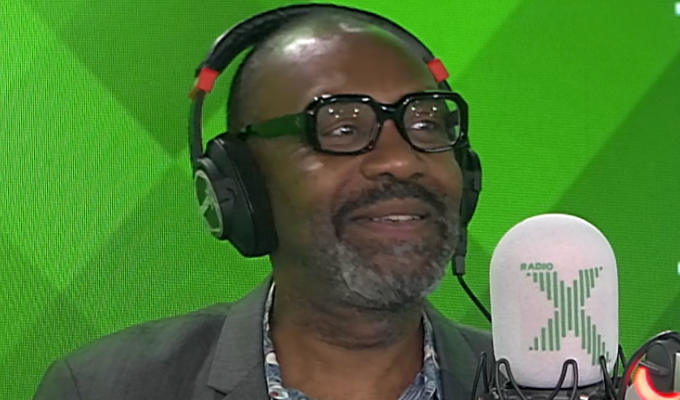
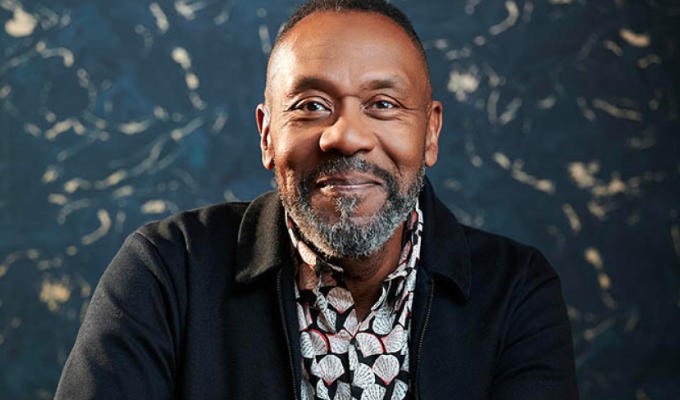
Lenny Henry

Date Of Birth: 28/08/1958

+
Videos

If You Like This...

From Live At The Apollo 2010


More Lenny Henry videos

If You Like This...
Lenny Henry hosts Live at the Apollo
Women Are Telepathic
Lenny Henry: Don't Move
Lenny Henry Show: Crime
+
Biography

Born in Dudley, West Midlands, to Jamaican immigrant parents, Lenny Henry has been a stand-up comedian since 1975, winning the ITV talent show New Faces when he was just 16.

It landed him a role on LWT's sitcom The Fosters – Britain's first comedy series with predominantly black performers – and gave him a jump-start on the circuit of working men's clubs and summer seasons, where he would perform impressions and joke-book gags.

He also signed up to be one of the comedians on tour with the controversial Black and White Minstrels Show – alongside white song-and-dance men who blacked-up to sing old songs from the days of slavery. He later said of the shows: ‘I didn't really know any better... It hurts thinking about it now. I think the term "ill advised" could be bandied about here.’

He eventually quit the show as he found a new outlet in the Saturday-morning kids' show Tiswas in 1978. Although his early appearances did not go down well, he began to create recurring characters such as David Bellamy and Trevor McDonut, which found favour with the young audience.

Throughout the early Eighties he continued to perform in summer seasons alongside the likes of Cannon and Ball, while also starting to tour his own show in colleges.

After Tiswas, he was signed up to the 1981 BBC sketch show Three of a Kind alongside Tracey Ullman and David Copperfield, which ran for three series. At about this time, he first visited the Comedy Store where he met his future wife, Dawn French, and realised there was a different form of comedy: 'I didn't have to rely on impersonations so much and that I could be funnier by being myself.’

Three of a Kind was followed by his first solo show, the Lenny Henry Show, featuring Delbert Wilkins. It has reappeared under various guises over the years, including Lenny Henry Goes To Town, a prime-time Saturday night show in 1998 in which he visited a different UK town every week, and Lenny Henry In Pieces , which won the Golden Rose Award at the 2001 Montreux Television Festival. In the summer of 2007 he returned to the idea of touring the UK, with Lenny's Britain, a comedy documentary made during his live tour.

Henry claims to be the first British comic to have made a live stand-up comedy film, with Lenny Henry Live and Unleashed going on general release back in 1989. His other live shows have included In Loud (1994), Larger Than Life in (1996), Large 99 (1999), Have You Seen This Man (2002).

Henry also set up his own production company, Crucial Films, whiche made the BBC Two comedy series The Real McCoy.

In 1991, Henry made his Hollywood debut in True Identity, in which he played a white man, but the film proved a flop. In 1993 he made the first series of Chef! for BBC One, playing a short-tempered chef, and was named BBC personality of the year by the Radio and Television Industry Club. A second and third series followed.

He has also appeared in a number of dramatic roles, playing a drug dealer in BBC One's Alive and Kicking in 1991 and as headteacher Ian George in the BBC One drama Hope and Glory, which ran for three series from 1999.

In 1997, Lenny travelled to the Amazon to film a survival documentary for BBC One; and he sailed across the Atlantic Ocean for a two-part documentary, Lenny's Atlantic Adventure, in 2000.

In early 2008, he hosted internet clip show lennyhenry.tv for BBC One, and starred in the Radio 4 show Rudy's Rare Records.

Henry was made a CBE in 1999 and gained a BA in English Literature from the Open University in 2007.

+
Reviews

Lenny Henry: Cradle To The Rave
Live Review
Dudley Concert Hall

Lenny Henry: Cradle To The Rave

Music has been the love of his life, but when Lenny Henry attempted to launch a career as a credible musician in the Eighties, he was doomed to fail. As he eloquently puts it in this new tour: ‘I love music – but music just likes me.’

‘You’re a decent guy’, legendary producer Trevor Horn told him at the time, before dashing his dreams by saying true musicians have it in their blood, and he didn’t. It’s a calling, not a hobby.

It’s hard to ignore the echoes Horn’s words have with Henry’s comedy career, too. His likeability is unrivalled, and he’s a bona fide national treasure – but there’s often little in his output that suggests stand-up, as opposed to broad entertainment, is a compulsion. Between his comedy, Shakespearean acting, music, writing and shiny-floor TV presenting, where is the line between polymath and dilettante?

Cradle To Rave is, however, his most personal show yet. Built around the role music has played in his life – and performed in front of an impressive montage of 100 or so classic album covers with Henry’s face superimposed – the concept allows him to revisit defining moments, with the help of a (mostly) cool soundtrack.

Here in his home town of Dudley – no Premier Inn for him tonight – Henry gets off to a hesitant start, rather awkwardly setting up the framework of the show via his ineptitude at the piano. But once he stars reminiscing about his upbringing in this neighbourhood, things take a great leap forward.

Life with his strict mother and emotionally distant father are evocatively conjured up, with him acting West Indian inside the house and West Midlands outside in an effort to ‘h-integrate’, as his Mum always insisted he should. When short on rent, the family would throw parties, install a powerful Jamaican sound system in the lounge and charge the neighbours to bump and grind. An on, with inevitable awkwardness, to Henry losing his virginity, borrowing a mate’s passion wagon come the big night.

This whole section is a delightful piece of nostalgia. He might not be pushing the boat out in terms of comic ideas, but he paints almost filmic images, full of warmth and charm, with no greater brush than his versatile voice. It was his knack for accents and impersonations that entertained his friends, and gave him the impetus to go on stage at the open talent night held at the Queen Mary Ballroom, where he performed an Elvis number, his first time on stage. He never felt joy like it, and singing was what he wanted to spend his life doing.

Life, we now known didn’t quite turn out like that for Henry; as he found fame via the his New Faces impressionist routine and the knockabout slapstick of Tiswas. The second half of the show charts his best-forgotten efforts at music during this time and beyond. While his erstwhile Theophilus P Wildebeaste character proved he had more than a decent voice, his success was limited to the occasional novelty single, and, a genuine highlight, backing vocals on a Kate Bush track.

But it’s harder for the audience to really go with him on this journey, which frequently risks becoming a CV of his professional life, too obviously scripted to be stand-up, too slight to be theatrical monologue. It’s hard to feel too much sympathy that his musical ambitions went unrealised, considering his comedy career was going so well. His brushes with the recording industry just don’t have the tenderness or the emotional tug of the humble teenage years. It is the difficult second half.

Perhaps inevitably for a music show from an eager-to-please entertainer, the show ended with a band; but it felt like Henry was having more fun living out every comedian’s rock-star fantasy than the audience were --– as they moved with tentative stiltedness on Henry’s command. There’s a reason why pub cover bands are best enjoyed with alcohol.

With a cruel irony, given his thwarted ambition, this is a show that gets tripped up by Henry’s desire to be a musician -– both in practice and in overemphasising this as a narrative angle. But even though Cradle To Rave is flawed, and sometimes cheesy, there are also enough touching, richly-described, and satisfyingly funny routines to suggest that at 50, Henry’s still got plenty to offer the comedy scene. If only he didn’t get distracted…

Date of live review: Friday 4th Feb, '11
Review by Steve Bennett
Lenny Henry: Where You From?

Show - Tour - Wednesday 7th Feb, '07-
BBC Comedy Presents... September 2008

Show - Misc live shows -
Lenny Henry: So Much Things To Say

Show - Edinburgh Fringe 2003 -
+
Comments

How on earth is this man still employed? He has nothing funny at all to say and he says it too loud. Rubbish impressions and relentless mentions of his colour and 'Dudloy'. Atrocious.

The real deal, December 2010


Was this man ever funny? No. Why is he still given airtime? F**k knows

radish, September 2010


Not many comments here.I think that speaks volumes about Lenny Henry.I made the effort to comment so that I could give him some advice.stick to voice-overs on kids tv, and advertising hotel rooms. forget about trying to be funny. He's not funny now - or at any time in the past.

Phil Lewis, September 2010


How can you live with Dawn French and still not be the funniest person in the house?

Alaric Dynevor, July 2008


Interesting comments, Dunc. I'm sure I saw you laughing (and I was only two seats away from you). Lenny clearly wasn't at the top of his game but I felt entertained.

Andy, July 2007


Sorry Lenny, I went to show at Blackpool that was shown recently on BBC1. I went to see a stand-up, not a has been talking about a TV programme he was making. When he did finally do some jokes the material was old and his final gag, well I was telling it ten years ago, and it didn't get many laughs then either. I went with low expectations and he failed to meet them.

Duncan, July 2007


Have your say:
:
:
:
 
+
News
Lenny Henry
Lenny Henry's RSS Feeds

Represented by:
Jennifer Rhodes
PBJ Management
22 Rathbone Street,
London
W1T 2LA
contact by email
Office: 020 7287 1112

Products
DVD (2007):
The Best of Saturday Live Series 1
Two-disc set

Lenny Henry's Shows: