
LIVE COMEDY SEARCH

Search Comedians

Advanced Search

Advanced Search

General

Comic Status

Comic Type

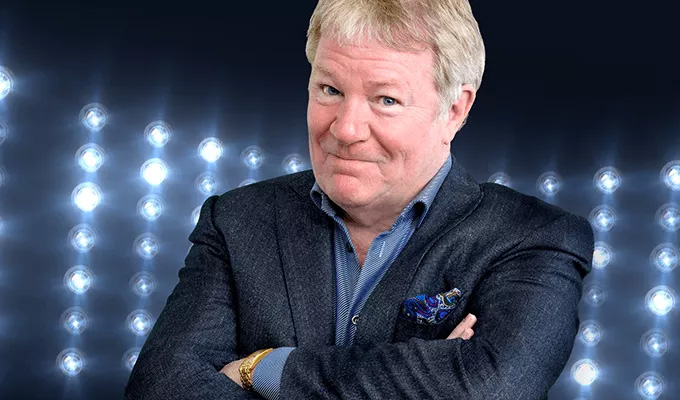
Jim Davidson

Jim Davidson

Date Of Birth: 12/12/1953

Jim Davidson had his first taste of entertaining at the age of 12 when he was chosen to appear in Ralph Reader's Gang Show at the Golders Green Hippodrome,telling gags and doing impressions.

But a year later he became disillusioned with showbusiness after failing the audition for the part of the Artful Dodger in the movie Oliver.

He found his way back to the stage when he along to a pub in Woolwich where the regular stand-up hadn't turned up. Persuaded by his friends, he ended up on stage - the start of a career in London's pubs and clubs.

His 1976 New Faces win propelled him to TV, followed by his own show and a couple of sitcoms before becoming a game show host with Big Break and The Generation Game.

In 1997 he was named Showbusiness Personality of the Year by the Variety Club of Great Britain

Davidson is a ardent supporter of British troops, and frequently travels abroad to entertain them. He has made four visits to the Falkland Islands and in 1999 he travelled twice to Macedonia, In the same year he launched the British Forces Foundation charity.

He is also a theatre producer, backing such West End hits Buddy and Great Balls of Fire, as well as a number of pantomimes throughout the UK.

His private life, however, has brought him more headlines than his professional one, with a succession of marriages, and drinking binges which have led him into reckless, often violent situations.


Jim Davidson Videos

Reviews

Stand Up And Be Counted

Stand Up And Be Counted

Jim Davidson has been talking a good game when it comes to his play Stand Up And Be Counted, softening his normal belligerence to accept that there may be a debate to be had about his brand of attack comedy, and the effect it can have on its victims.

But when it comes to putting this into practice, it’s handled with the subtlety of a chemical plant. Arguments are simplistic, drama is crowbarred in and the characters one-dimensional stereotypes – hardly a convincing argument that Davidson has changed his ways.

The only one of any complexity is the lead character Eddie Pierce, a washed-up alcoholic comic who peddles outdated pub jokes about Paddies and poofs, while seething with bitterness that he’s no longer a big TV star. Remind you of anyone?

read more of this review …

Keen to prove he’s still relevant, the old bigot agrees to perform at a West End Aids benefit. In Davidson’s unenlightened binary mind this means the entire audience comprises 600 gay men. But as well as facing his fears onstage, he must also mingle backstage with his professional nemeses from the younger generation.

Chief of these is Earl T Richards, a hot-property comic played by modern circuit stand-up Matt Blaize. And lest you think that Davidson can’t write realistic black characters, Earl is a sexually aggressive, homophobic man who boasts about black athletic supremacy and supplies drugs to another character. And he’s got a big cock. On meeting Eddie’s wife, Suzie, Richards is shedding clothes and making his moves – and since Eddie thinks he’s not on TV any more because of the likes of Earl, this clichéd character is basically someone who’s come into Eddie’s patch, taking his jobs and ravishing his women.

Also on the bill is Ellie Jayne, a vacuous bimbo who came second in England’s Got Talent as a comic, even though she seems to have so little concept of comedy, it’s hard to believe she could ever win over an audience. She is the prompt for Eddie’s predictable whines about the superficial, disposable qualities of today’s reality-show culture, but there’s little depth beyond this.

Then there’s Billy Simpson, a camp chat-show host in the Alan Carr mould. You can tell he’s gay as he wears a pink shirt and goes ‘Oooh’ in a style so effeminate it makes John Inman look like Silvio Berlusconi. Eddie rails against the number of ‘turd burglars’ on TV – although behind the homophobic jibes, Davidson does raise one valid point: If stereotyping is so bad from comics of his generation, why do so many gay comics camp it up so much?

Largely, though, Eddie’s argument – and we assume, Davidson’s – is that people should ‘lighten up’ as a joke is just a joke. He’s challenged on it by the other characters, but toothlessly, serving only to prompt the defence. Although these are ideas that should be debated, it needs a stronger – and perhaps less partisan – writer than Davidson to put some meat on the issue.

Instead of winning the argument, we are supposed to feel sorry for Eddie because of the personal tragedies and setbacks he’s had – which are clunkily and oh-so conveniently revealed in the second half. Eddie thus emerges as a flawed character with a tough life, deserving of our sympathy for that alone. All that hatred-peddling is thus brushed under the carpet under a schmaltzy ‘underneath it all, he’s got a heart of gold’ message. It’s unnerving to think Davidson wrote this about what is essentially himself.

As well as the backstage drama, the second half of the show also includes extracts from the benefit gig, providing an interesting, if not always seamless, mix of stand-up and theatre.

Despite what we see in the dressing room, the dim character of Ellie proves surprisingly adept as a comedian, at least in the hands of actress Rachael Barrington, giving at least some credence to the idea she could have won a talent show. As Billy, Lloyd Hollett – a genuine cruise ship entertainer – has some pizzazz as a compere, though his supposedly modern material is antiquated. Blaize, who presumably wrote his own set here as it definitely has a contrasting feel to the rest, has oodles of swagger and charisma – although you might wonder how his character got to be so successful with such a mixed bag of material, from the lows of punchline-free polemic to the highs of sharp one-liners.

Unlike Trevor Griffiths’ thematically similar – and rightly acclaimed –  1975 play Comedians, which foresaw the alternative comedy boom by a few years, Stand Up And Be Counted feels behind the times. No consideration is given to modern shock comics such as Frankie Boyle, which you would have thought were hugely relevant to this argument. instead Eddie/Jim bemoans modern comedy for being politically correct and banging on about ‘issues’ such as global warming. You could probably count on the fingers of one hand the number of comedians in these apolitical times talking about this … and none of them is on telly. But in this world Davidson has created, Ben Elton is still respected.

Given all the baggage he comes with, there is undeniably a frisson of seeing Davidson examining his own work and image, however flawed the execution. And when he performs stand-up as Eddie, he’s giving the audience what they want. They lapped up his dirty pub gags and second-hand quips (an Emo Philips joke gets one of the best responses) with such glee, that you wonder whether Davidson mightn’t have been better just touring as himself, without all the shenanigans of the play. Some of the previous proceedings do get laughs; although it’s often from horrific homophobic jibes, or rants that sound like a Richard Littlejohn column.

At one point Eddie is asked if he wants to be remembered as a great comic, or for being a bete noir – and this play appears very much as Davidson’s attempt to rewrite his own legacy. But while there are valid points to be made about the imperfect ethos of modern comedy, you suspect Davidson’s core audience could do without the navelgazing, while such a simplistic script as this is unlikely to win over an artier crowd. A missed opportunity.

Tuesday 8th Mar, '11
Steve Bennett

News

Comments

Older Comments

Jim Davidson Dates

Thu 22 Aug 2013

Represented by

We do not currently hold contact details for Jim Davidson's agent. If you are a comic or agent wanting your details to appear on Chortle, click here.